
You don’t need an expansive garden to grow your own food. You need a mason jar, some seeds, water, and about four days of patience.
I started growing broccoli sprouts at home a few years ago, and it’s become a regular part of my family’s routine. The process is absurdly simple, the cost is minimal, and the nutritional payoff is enormous. Broccoli sprouts contain 10 to 100 times more sulforaphane, a cancer-fighting compound, than mature broccoli. You’d have to eat an unreasonable amount of adult broccoli to match what a handful of sprouts delivers.
The catch is you can’t easily buy them. Sprouts have a shelf life measured in days, and past contamination outbreaks have pushed most grocery stores to stop carrying them. Learning how to grow broccoli sprouts at home is the most reliable way to get this nutrient-dense food into your diet.
What Sprouting Actually Is
Sprouting is the process of turning a seed into a young plant. When you soak a seed in water, it begins to germinate, activating enzymes and metabolic processes that fuel growth. Those same enzymes dramatically alter the seed’s nutritional profile.
The germination process increases bioactive compounds, improves nutrient bioavailability, and makes the seed more digestible. The result is higher levels of vitamins, minerals, amino acids, and phytonutrients than you’d find in either the dry seed or the fully mature plant.
Sprouted foods carry anti-inflammatory, anti-diabetic, and anti-cancer properties. They increase fiber content and act as a prebiotic for your gut microbiome. Once you learn how to grow broccoli sprouts at home, you can capture the full benefit of that enzymatic burst from seed to plate.
Why Broccoli Sprouts Stand Out
Sulforaphane is a compound found only in cruciferous vegetables, and broccoli sprouts contain it in concentrations that dwarf what you’d find in mature broccoli, anywhere from 10 to 100 times higher.
Sulforaphane activates a cellular defense pathway called NRF2 (nuclear factor erythroid 2-related factor 2). This pathway regulates the body’s response to oxidative stress and carcinogens.
The mechanisms are striking: Sulforaphane inhibits enzymes that promote cancer formation, activates detoxifying enzymes that help eliminate carcinogens, triggers apoptosis (the self-destruct signal cells receive when they’re no longer healthy), and prevents angiogenesis (the growth of new blood vessels that tumors need to fuel their expansion).
These aren’t theoretical benefits from massive supplement doses; they come from a food you can grow on your kitchen counter in less than a week. For patients considering their long-term cancer prevention plan, broccoli sprouts are among the most accessible interventions I recommend.
Why You Need to Grow Broccoli Sprouts at Home
Some specialty and organic stores carry sprouts, but most mainstream grocers don’t. The reason comes down to shelf life and food safety.
Fresh sprouts last about a week under ideal conditions. By the time a producer grows them, packages them, ships them to a distribution center, and gets them onto a retail shelf, most of that window has closed.
The germination process itself requires warm, humid, moist conditions, the same environment that encourages bacterial growth. Past outbreaks of E. coli and Salmonella linked to commercially produced sprouts (Jimmy John’s famously scaled back their sprout offerings for this reason) have made retailers reluctant to carry the product.
Growing broccoli sprouts at home eliminates the supply chain risk and puts you in control of freshness and handling. If you’re already conscious of what goes into your food, home sprouting is the logical next step.
How to Grow Broccoli Sprouts at Home: Step by Step
The equipment costs about $20 and fits on a kitchen counter. You’ll need a sprouting kit with mason jars (metal mesh lids and an angled stand for draining) and organic sprouting seeds. Make sure the seeds are certified organic and labeled for sprouting, so they’re free of preservatives and contaminants.
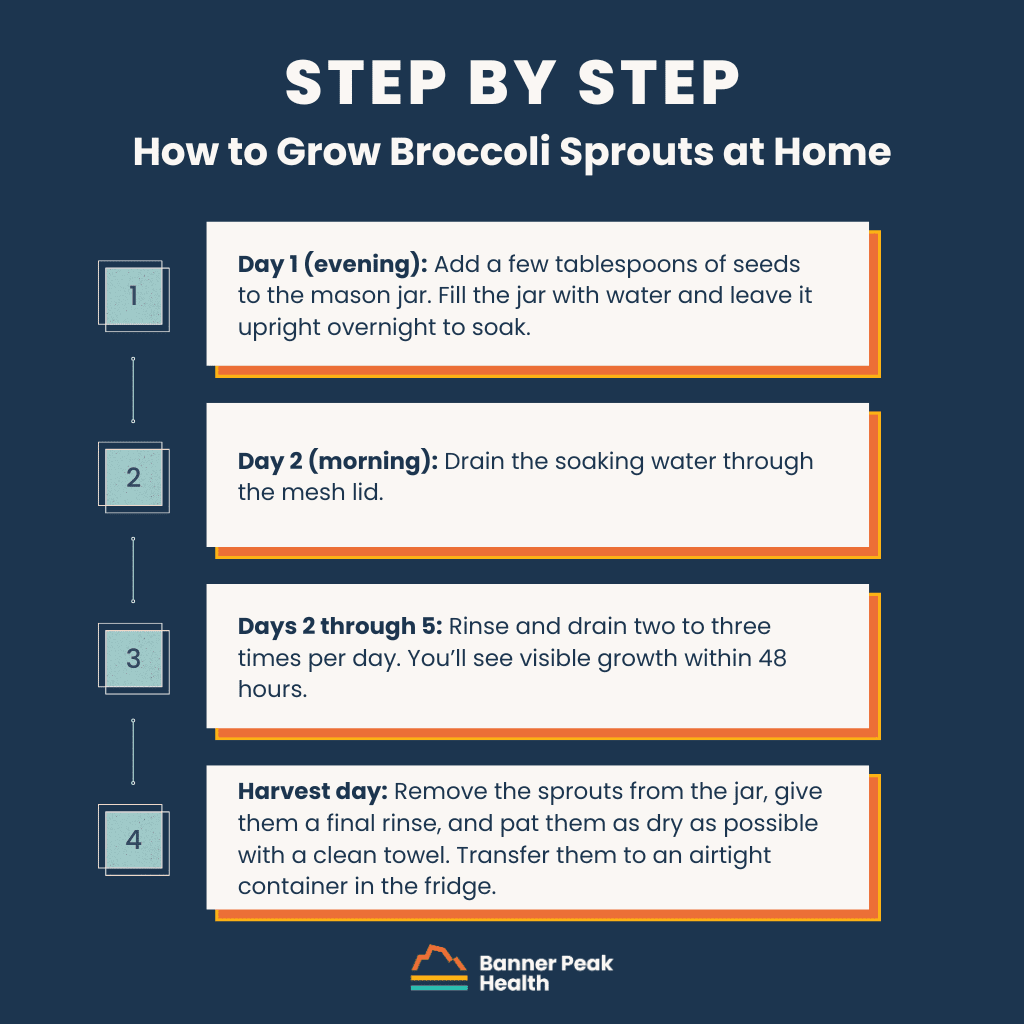
Day 1 (evening): Add a few tablespoons of seeds to the mason jar. Fill the jar with water and leave it upright overnight to soak.
Day 2 (morning): Drain the soaking water through the mesh lid. Rinse the seeds with fresh water, drain again, and place the jar on the angled stand so it continues to drain and air can circulate. Airflow matters; stagnant moisture invites mold and bacteria.
Days 2 through 5: Rinse and drain two to three times per day. You’ll see visible growth within 48 hours. Broccoli sprouts are typically ready by day four or five.
Harvest day: Remove the sprouts from the jar, give them a final rinse, and pat them as dry as possible with a clean towel. Transfer them to an airtight container in the fridge. They’ll keep for about a week.
That’s it. The entire process of learning how to grow broccoli sprouts at home takes one cycle to master.
I’ve found it’s a great activity for kids, too. My children loved watching the seeds fill the jar in under a week, a much faster payoff than waiting months for a garden vegetable. Add the rinse cycle to your morning routine right alongside making your morning coffee.
Other Seeds You Can Sprout (and One to Avoid)
Most seeds can be sprouted. In my house, we rotate through broccoli, alfalfa, chickpea, and lentil sprouts. Mung beans and kale sprouts are popular options, too.
You can buy mixed sprouting seed blends for variety.
The nutritional upgrade applies across the board. Sprouting increases the vitamin and mineral content of virtually any seed. Even foods you already eat, like quinoa, become more nutritious when sprouted before cooking.
Ezekiel bread is a familiar example of this principle in action: It’s made entirely from sprouted grains with no flour, which is why it contains more fiber and protein than conventional bread. If you’re paying attention to your metabolic health and hemoglobin A1C levels, sprouted grains are a smart swap.
One exception: Don’t sprout raw kidney beans. They can produce digestive toxins during germination that cause GI distress.
Today’s Takeaways
Knowing how to grow broccoli sprouts at home is one of the simplest, cheapest ways to add a superfood to your daily meals. Toss them on sandwiches and salads, or blend them into smoothies if the flavor is too strong on its own (my kids don’t notice them in a fruit smoothie with spinach).
Learning how to grow broccoli sprouts at home requires no gardening skill, no special space, and less than five minutes of daily attention. A $20 kit and a bag of organic seeds get you started this week. For a food that delivers 10 to 100 times the sulforaphane of mature broccoli, the return on investment is hard to beat.
At Banner Peak Health, we’re always looking for accessible, evidence-based ways to improve what our patients eat and how they feel. If you’d like to talk through dietary changes that fit your health goals, contact us to schedule a visit.