
The term “ultra-processed food” is everywhere right now, but it’s often confused with simple junk food.
So, what is ultra-processed food? Why are ultra-processed foods bad for you? As a physician focused on prevention, I explain the distinction to patients regularly, and the difference matters more than most people realize.
Fifty-three to 58% of Americans’ total daily calories come from ultra-processed foods. Historically speaking, human beings were only recently exposed to these substances. No surprise, then, that we’re learning exposure to this stuff has serious health consequences.
What Is Ultra-Processed Food?
There’s no universally agreed-upon definition, but the NOVA classification system provides a useful framework: Ultra-processed food consists of formulations of ingredients, mostly of exclusive industrial use, resulting from a series of industrial processes.
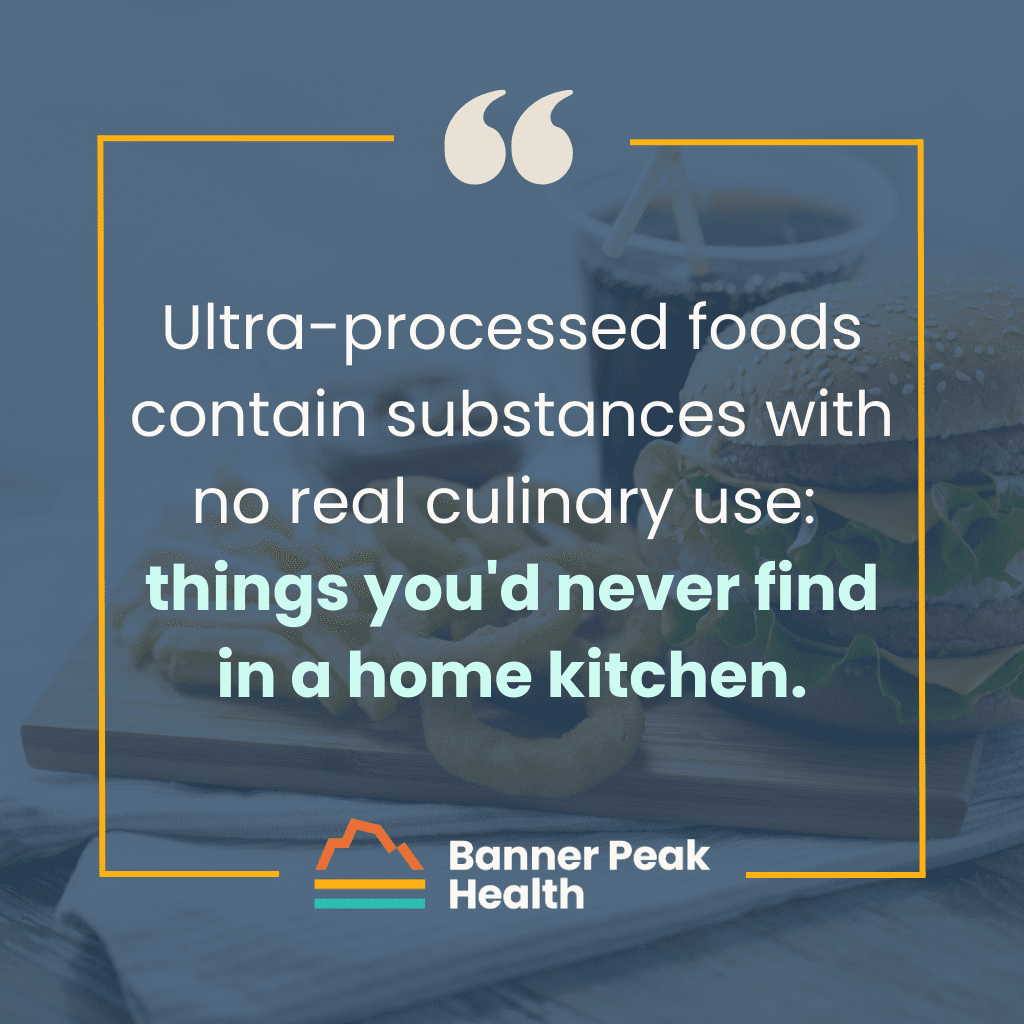
Ultra-processed foods contain substances with no real culinary use: things you’d never find in a home kitchen. High fructose corn syrup and hydrogenated oils are prime examples. Manufacturers add these ingredients to extend shelf life, improve appearance, and increase palatability.
Whole Foods vs. Minimally Processed Food vs. Ultra-Processed Food
Imagine your grocery store’s produce department. What do you find there? Uncooked beans, lentils, fruits, vegetables, nuts, seeds, eggs, and fresh meats.
These are whole foods, unadulterated products you could find in nature.
Minimally processed foods have been cleaned, chopped, frozen, or dried without fundamental chemical alteration. Frozen fruit, canned beans with some added spices and salt, and rolled oats fall into this category. Mechanical processing differs from chemical manipulation.
Ultra-processed foods occupy the opposite end of the spectrum. Consider deli meats: a perfectly round shape with rivets from something compressing it, wrapped in plastic shrink wrap. I’ve never seen an animal that looks like that.
Compare that to a butcher slicing from a whole turkey breast that’s been roasted in-house. The difference is stark.
Why Are Ultra-Processed Foods Bad?
We don’t know all the effects of every chemical additive, but common sense suggests avoiding substances humans never encountered throughout our evolutionary history.
Here are just a few reasons ultra-processed foods are bad for you:
Engineered for Overconsumption
Ultra-processed foods are scientifically engineered to be highly palatable, with high levels of sugar, fat, and salt. When you eat these foods, your brain responds as though it’s discovered something precious.
Historically, we were hunter-gatherers who didn’t have these nutrients in abundance. Your brain says, “Fat! Sugar! This is great. Let me gobble this up because I don’t know when I’ll find it again.”
If you pause and reflect on eating a bag of potato chips, you’ll recognize the addictive quality. This isn’t just perception; data supports the fact that these foods are genuinely addictive.
They activate brain reward circuits, flooding your system with dopamine and serotonin. Every bite delivers a rush of chemicals that says, “Give me more.”
Disrupted Hunger Signals
Need another reason ultra-processed foods are bad? They disrupt the gut-brain axis.
This is why GLP-1 agonists work so well: They modulate appetite and gastric motility, counteracting the disrupted signaling that ultra-processed foods create. You consume 2,000 calories but don’t feel full because your satiety mechanisms have been hijacked.
Many ultra-processed foods have high glycemic loads. Eat potato chips or candy, and you get a euphoric spike in blood sugar followed by a crash that leaves you hungrier than before.
Structural Brain Changes
Brain imaging studies show that ultra-processed foods structurally change your brain.
Areas involved in inhibitory control and reward processing are affected. More concerning, these changes occur in regions associated with neurodegenerative diseases like Alzheimer’s, multiple sclerosis, and Parkinson’s.
The Health Consequences
The downstream effects of eating ultra-processed foods include increased risk of diabetes, obesity, cardiovascular disease, and neurodegenerative conditions.
Multiple studies demonstrate increased all-cause mortality: Consume these foods in excess, and you’re more likely to die at an earlier age.
The Mediterranean Diet Connection
There’s a hypothesis about “healthy” diets like the Mediterranean diet. The benefits may not come solely from the healthy foods you add; they may come from the bad ultra-processed foods you remove.
I believe it’s a combination. You’re removing addictive substances that compel overconsumption, and you’re adding nutrient-dense whole foods.
I tell my patients to eat out less, avoid junk and bad ultra-processed foods, focus on plants, and include lean animal proteins. Once you understand these mechanisms (what’s actually happening to your brain when you eat these foods), that knowledge will compel you to change.
How to Identify Bad Ultra-Processed Foods
If you can’t pronounce an ingredient, it’s probably a chemical that doesn’t belong in your food.
Will it cause you to grow an extra arm? No. But human beings didn’t evolve with these substances as part of our daily intake.
Beware the Marketing
Health is a marketing scheme. Every bag of chips and box of cereal carries some health-related messaging.
“Eat these Fruit Loops! They have all the vitamins and minerals you need!” In reality, it’s all additives with no natural component.
The current fad is high-protein chips. Maybe they’re not the worst thing in the world, but instead of eating protein from a bag of chips, have a chicken breast with a salad, trail mix, a can of tuna, or Greek yogurt. These are better protein sources.
Reading Ultra-Processed Food Labels Effectively
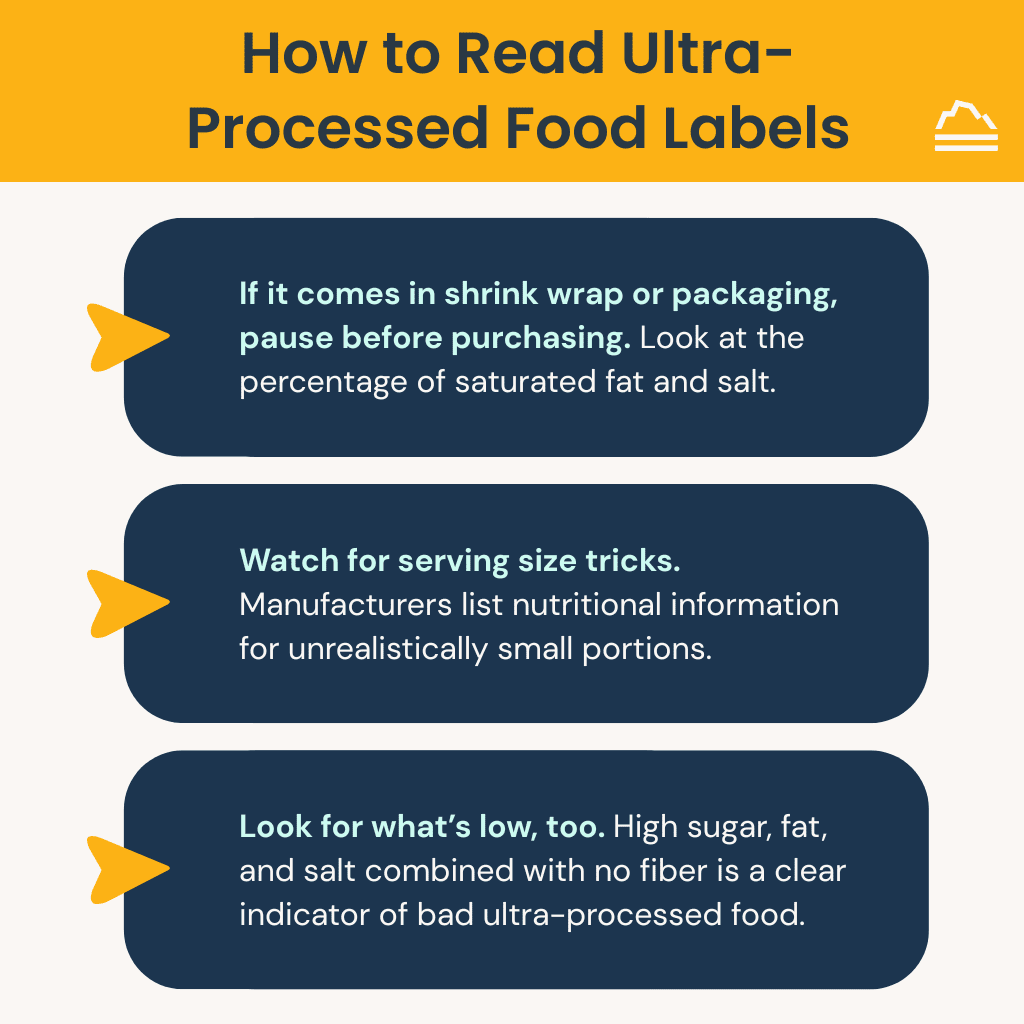
If it comes in shrink wrap or packaging, pause before purchasing. Look at the percentage of saturated fat and salt. If something contains 50% or more of your daily salt intake, that’s a red flag.
Watch for serving size tricks. Manufacturers list nutritional information for unrealistically small portions. That bowl of ramen noodles might claim to be four servings when you know you’ll eat the whole thing. Multiply accordingly.
Look for what’s low, too. High sugar, fat, and salt, combined with no fiber, is a clear indicator of bad ultra-processed food. Ask yourself, how was this made? Was it minimally processed and packaged, or does it contain refined flour and unrecognizable ingredients?
How to Start Removing Bad Ultra-Processed Foods From Your Diet
Be realistic with your expectations. Cleaning your entire pantry overnight isn’t sustainable for most people. Instead, find one ultra-processed food in your normal routine and replace it.
Maybe you eat chips every day. Replace them with popcorn you make yourself (not the bagged kind loaded with butter and additives, but kernels you pop and season lightly). Or, swap the chips for carrots, vegetables, and hummus.
If you don’t know how to cook, now’s the time to learn. When you prepare your own food, you control what goes into it, and you’ll know you’re eating fewer ultra-processed foods.
The Salad Challenge
Instead of snacking on bad ultra-processed foods, have one salad with lean protein every day for a month. See how you feel.
It doesn’t matter how much salad you eat. You won’t gain weight. You’ll only benefit from a nutritional and metabolic perspective.
Here’s what I put in my salads:
- Arugula
- Cucumber
- Tomato
- Spinach
- Kale
- Multiple colored peppers
- Carrot
- Onion
- Beets
- Feta cheese
- Lemon and olive oil dressing
- Dried herbs (basil, oregano, thyme, rosemary)
- Lean protein (chickpeas, beans, tuna, or chicken)
That’s potentially eight to 10 different plants in a single meal. See how many you can fit.
View Food as Fuel
People come to me wanting to feel better, optimize their health span, and reduce their risk of chronic illness. To accomplish those goals, you need to give your body the best fuel possible. If you owned a Lamborghini, you wouldn’t put diesel in it; that would ruin the engine. The same logic applies to your body.
This principle applies to how we raise our children, too. What do we put on their plates? Kids will inevitably eat snacks at birthday parties, but is that the food we keep in the house all the time?
If you want your child (or even your pet) to be as healthy as possible, provide the highest quality fuel.
Today’s Takeaways
What is ultra-processed food? Why are ultra-processed foods bad? Knowing the answers to these questions helps you make better choices.
Start small. Replace one ultra-processed food item with a whole food alternative. Learn to cook if you haven’t already. See how many plants you can include in your daily meals.
At Banner Peak Health, we work with patients to develop sustainable nutrition strategies that support long-term health. During your next visit, we’re happy to discuss your dietary habits and create a plan that works for you.