

The supplement aisle at your local pharmacy is overwhelming. Rows of bottles promise gut health, better digestion, and improved immunity. How do you separate science from marketing hype?
I’ve spent years studying prebiotic supplements. At Banner Peak Health, we take a personalized, evidence-based approach to them. Let me walk you through what we’ve learned.
What Are Prebiotics?
The technical definition: Prebiotics are non-digestible dietary components that resist digestion throughout the small intestine and reach the colon, where they serve as a substrate for fermentation by gut microbes.
The simple version: Prebiotics are food for the bacteria in your gut.
Prebiotics don’t feed all bacteria equally. They selectively nourish the healthier, anti-inflammatory types, including Lactobacillus and Bifidobacterium.
These bacteria have the genetic makeup to process prebiotic compounds. When you consume prebiotics, you’re choosing which bacterial populations get stronger.
Common prebiotic compounds include inulin (found in onions, garlic, and asparagus), fructooligosaccharides (similar food sources), galactooligosaccharides (found in legumes), and pectin (found in apples and pears). If you’re eating fiber, you’re eating prebiotics.
Prebiotics for Gut Health vs. Probiotics
Patients often confuse these two terms, so let me clarify.
Probiotics are live microorganisms you consume directly, either in supplement form or through foods like yogurt, kimchi, miso, tempeh, and kefir. You’re swallowing the actual bacteria.
Prebiotics support the healthy bacterial populations already living in your gut. Probiotics are the guests you’re inviting to dinner, while prebiotics are the meal you’re serving to the guests already at the table.
Both have their place in a gut health strategy. Prebiotics for gut health work by feeding the good bacteria, which then produce beneficial compounds called short-chain fatty acids. This is where the health benefits begin.

The Science Behind Prebiotics for Gut Health
When your gut bacteria ferment prebiotic fiber, they produce short-chain fatty acids (SCFAs), primarily acetate, butyrate, and propionate. These compounds have wide-ranging health benefits.
Your gut lining is a barrier between intestinal contents and your bloodstream. A healthy barrier keeps nutrients in and pathogens out.
When this barrier breaks down (sometimes called “leaky gut” or dysbiosis), microbial compounds, such as lipopolysaccharides, can leak into circulation. This triggers inappropriate immune activation and chronic inflammation.
SCFAs strengthen this intestinal barrier. They also modulate immune response, improve stool consistency and frequency, support glucose management, and improve lipid profiles. Emerging research suggests they may support mood and cognitive function, though that evidence isn’t as strong yet.
SCFAs increase calcium absorption and may help decrease bone turnover markers in post-menopausal women. Studies show increased activity of osteoblasts (bone-building cells) in animal models.
The flip side is equally revealing. When researchers examine patients with systemic disorders, they consistently find dysbiosis. Type 1 diabetes, multiple sclerosis, rheumatoid arthritis, celiac disease, lupus, IBS, Crohn’s disease, inflammatory bowel disease, obesity, and liver cirrhosis all reflect disrupted gut microbiomes.
This doesn’t prove causation, but the pattern is clear: A balanced gut microbiome correlates with better health outcomes across the board.
Finding High-Quality Prebiotic Supplements
The supplement industry isn’t regulated like pharmaceuticals. Product quality differs between brands.
I look for third-party verification from organizations such as USP, NSF, or ConsumerLab. This testing confirms the product contains what the label claims and isn’t contaminated with harmful substances. It’s not always possible to find verified products, but that’s my starting point.
Most Americans consume only 10–15 grams of fiber daily. The goal is 30 grams or higher; I often aim for 40–50 grams with my patients. This gap is where prebiotic supplements become useful.
How to Test Prebiotic Supplements
A proper experiment requires a protocol. Here’s the approach I recommend:
Start with your goals. Talk to your doctor about what you’re trying to accomplish. Are you dealing with constipation? Looking to support metabolic health? Your goals determine which prebiotic supplement makes the most sense.
Start low, go slow. Your gut microbiome can change rapidly, but you don’t want to shock your system. Gradually increase your intake over several weeks.
Be consistent. Three to four weeks of regular use is the minimum trial period. You want to consistently feed those good gut microbes so they can flourish and produce downstream health benefits.
Monitor for side effects. Bloating, diarrhea, and flatulence are common when introducing fiber. Some products cause fewer side effects than others.
Track your results. If you’re dealing with constipation, you’ll notice improved bowel regularity and more complete bowel movements. You’ll spend less time on the toilet and feel less bloated.
For patients with more complex issues, we’ve explored microbiome testing kits. We’re not high on them for everyone, but they can be relevant tools for certain cases.
Food First, GI Supplements Second
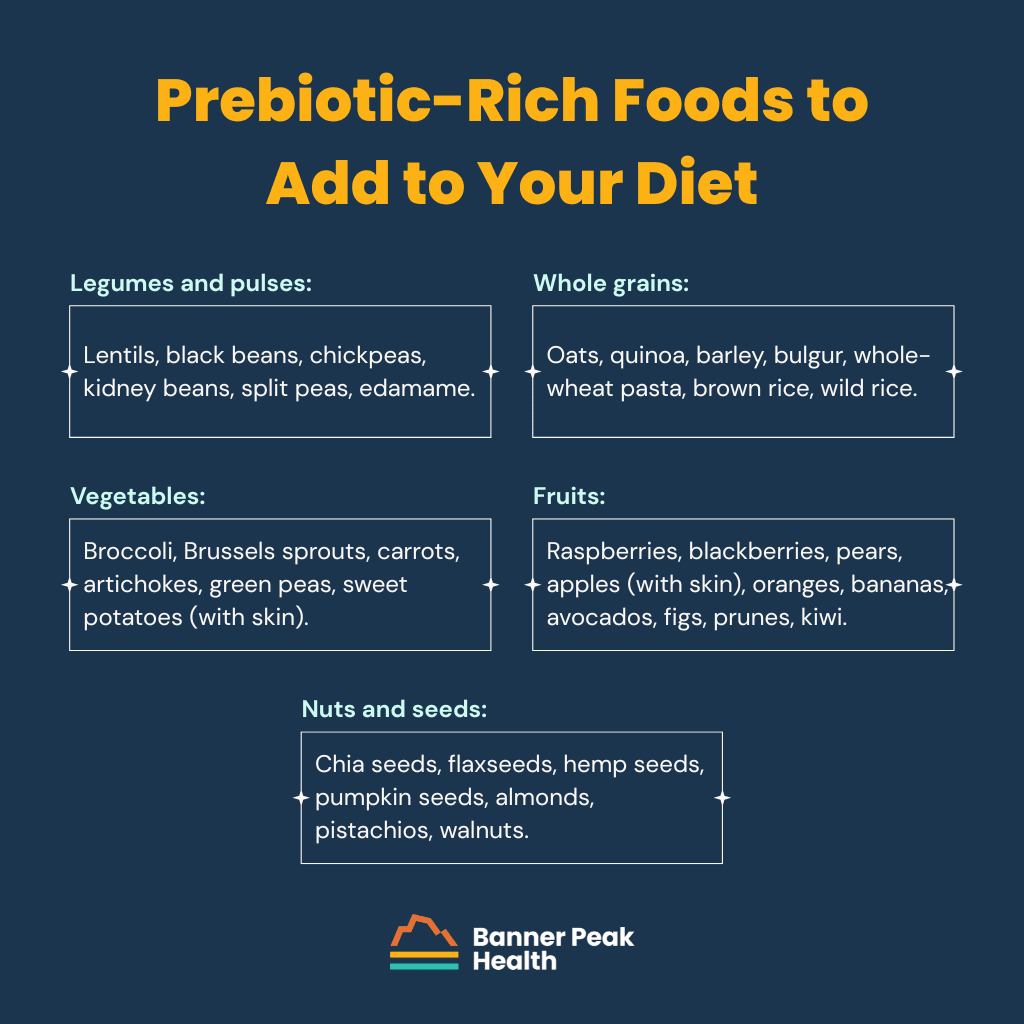
I recommend dietary fiber as the foundation of any GI supplements strategy. The list of prebiotic-rich foods is extensive:
- Legumes and pulses: lentils, black beans, chickpeas, kidney beans, split peas, edamame
- Whole grains: oats, quinoa, barley, bulgur, whole-wheat pasta, brown rice, wild rice
- Vegetables: broccoli, Brussels sprouts, carrots, artichokes, green peas, sweet potatoes (with skin)
- Fruits: raspberries, blackberries, pears, apples (with skin), oranges, bananas, avocados, figs, prunes, kiwi (with the skin for more fiber and vitamins)
- Nuts and seeds: chia seeds, flaxseeds, hemp seeds, pumpkin seeds, almonds, pistachios, walnuts
Consume a variety of soluble and insoluble fiber sources. Each type of plant food brings different phytonutrients and feeds different bacterial populations.
For constipation in particular, kiwi and prunes have solid research behind them. One multi-center randomized controlled trial found that eating two kiwis a day for four weeks improved complete spontaneous bowel movements in patients with functional constipation.
Prebiotic Supplements I Recommend
After trying multiple different fiber supplements myself, here’s what I’ve learned.
Psyllium Husk
Psyllium has the strongest data for treating constipation of all fiber supplements. The evidence is solid. For many of my patients with constipation, psyllium makes a dramatic difference.
Three reputable brands:
A note on safety: All psyllium products carry a Prop 65 warning due to lead content. Psyllium comes from plants that absorb lead from soil, so some contamination is inevitable.
ConsumerLab tests these products annually, and results differ by batch. One year, Yerba Prima tests best; the next year, it’s Organic India.
For patients with severe constipation, the trade-off is likely worthwhile. The amounts needed for therapeutic benefit are unlikely to cause major harm, but this concern has led me to explore alternatives.
Inulin
Emerging data supports inulin, particularly chicory inulin. A 2025 randomized controlled trial found 12 grams per day for four weeks increased stool frequency, improved abdominal symptoms, improved quality of life, and increased butyrate-producing Bifidobacterium populations.
Thorne FiberMend
I steer most patients toward this product. Thorne is an excellent brand overall, and FiberMend is NSF certified with third-party verification.
It’s a combination of rice bran, guar gum, and apple pectin. Pectin has decent data supporting its effect on motility. The product contains Sun Fiber (a standalone guar gum product with its own evidence base), so you get multiple benefits in one supplement.
FiberMend doesn’t have a strong flavor, so it’s easier to take than psyllium. It causes less bloating and flatulence than psyllium for most patients.
Sunfiber
If you want a simpler option, Sunfiber contains only guar gum. It’s well-tolerated and doesn’t cause the same GI side effects as psyllium.
The Banner Peak Health Approach to Prebiotic Supplements
At Banner Peak Health, we take a personalized approach to prebiotic supplements. Your goals, symptoms, and preferences all influence our recommendations.
Some patients can’t tolerate mixing powder into a drink every day. For them, encapsulated psyllium might be the answer. Frequent travelers may need portable packets they can take on the road.
We’ll help you figure out the best option for your body and your lifestyle. Then, we’ll monitor your progress together and adjust as needed.
If you’re interested in using prebiotics for gut health, start the conversation during your next visit. We’re here to help you become an informed, empowered partner in your own health, not a passive consumer of GI supplements.