
Most people equate iron deficiency with anemia: feeling tired, looking pale, and running low on energy. That picture isn’t wrong, but it’s incomplete.
Anemia means your blood doesn’t carry enough hemoglobin, the protein in red blood cells that delivers oxygen from your lungs to the rest of your body. About 60% of your body’s iron lives in hemoglobin, which is why routine bloodwork and lab testing focus on red blood cell counts. The other 40% does work that most patients never hear about.
Iron deficiency symptoms affect virtually every system in your body. Iron fuels the enzymes in your mitochondria (your cells’ energy producers), helps your brain manufacture neurotransmitters, builds myoglobin (a local oxygen reserve inside muscle cells), drives DNA synthesis and repair, and supports immune cell function.
When iron runs low, the consequences don’t stop at fatigue. Hair loss, brittle nails, and exercise intolerance are common. The five weird signs of iron deficiency below are ones my patients never see coming.
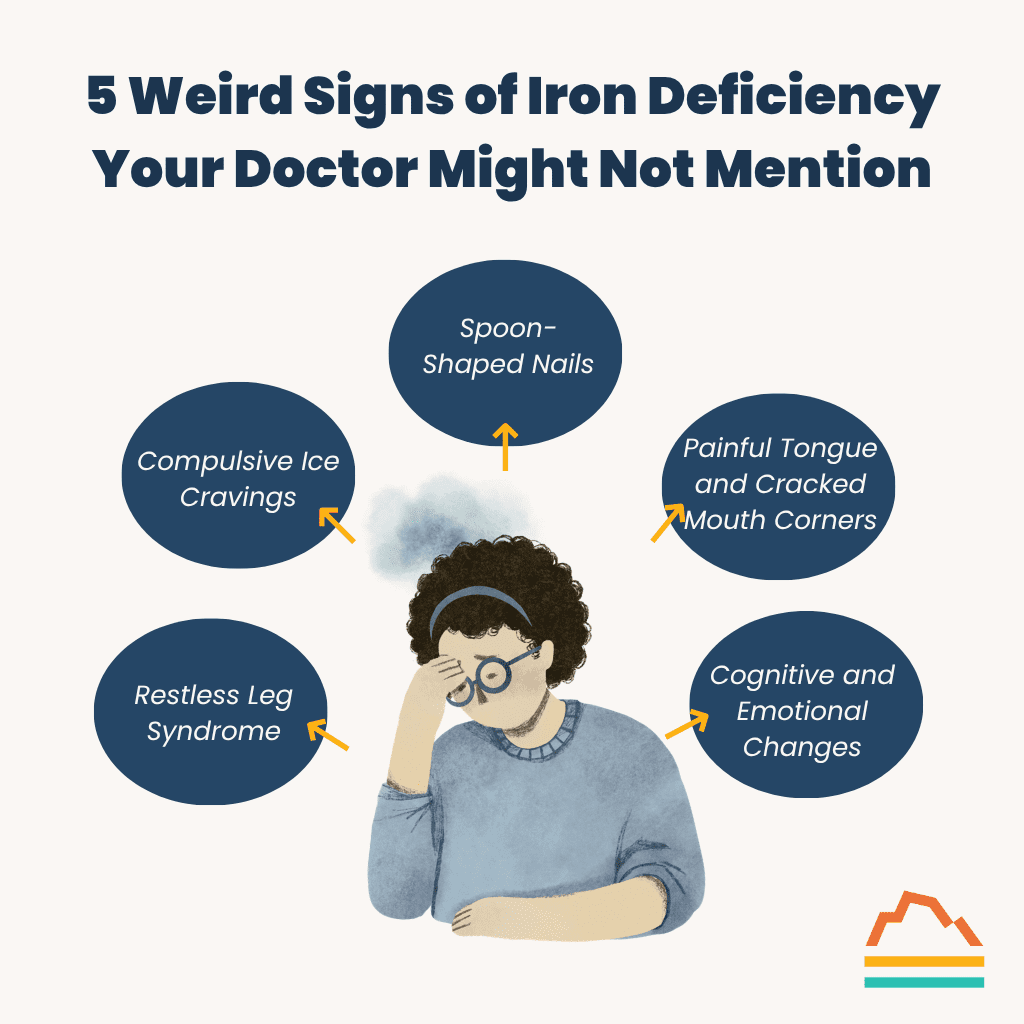
5 Weird Signs of Iron Deficiency Your Doctor Might Not Mention
1. Restless Leg Syndrome
About 30% to 40% of people with low iron develop restless leg syndrome, an uncomfortable and persistent urge to move the legs, especially at rest and at night. The sensation can range from a tingling to an aching that only subsides with movement, and it can be severely disruptive to sleep quality.
The mechanism happens at the brain level. Without adequate iron, your brain can’t produce enough dopamine, and this reduced dopamine production triggers restless leg syndrome. Even when blood iron levels are only mildly low, the brain can experience a severe deficit, making neurological symptoms appear long before anemia shows up on standard labs.
2. Compulsive Ice Cravings
Pagophagia, the medical term for compulsive ice chewing, occurs in 40% to 50% of iron-deficient individuals. Patients describe an intense, almost addictive need to chew ice, sometimes consuming bags per day. The craving disappears when iron levels return to normal.
The physiology behind this is one of the most fascinating iron deficiency symptoms I’ve encountered. Chewing ice lowers the temperature in your mouth, which reflexively dilates blood vessels in your brain and increases blood flow to compensate for impaired neurotransmitter production. Studies confirm that iron-deficient individuals experience measurable cognitive improvement from ice chewing, an effect absent in people with normal iron levels.
This reflex explains a familiar phenomenon: ice cream headaches. Brain freeze causes the same blood vessel dilation mechanism, but in a person who doesn’t need the extra blood flow to the brain.
The dilation becomes painful instead of therapeutic. It’s two sides of the same coin.
3. Spoon-Shaped Nails
Koilonychia, or spoon-shaped nails, is one of the more visually distinctive low-iron signs. The nails curve upward at the edges, forming a concave shape, almost like a tiny spoon.
Nail bed cells divide rapidly and need functioning DNA synthesis and cell repair pathways to manufacture the nail plate correctly. When iron stores drop, the manufacturing process breaks down, and the nail develops an abnormal shape.
Any cell in the body that turns over quickly, including nail, hair, and skin cells, depends on adequate iron to maintain normal growth.
4. Painful Tongue and Cracked Mouth Corners
A swollen, red, painful tongue (atrophic glossitis) and cracks at the corners of the mouth (angular cheilitis) are among the lesser-known signs of iron deficiency. These symptoms send patients to dentists and dermatologists who may treat the surface-level problem without investigating the underlying cause.
The mechanism is the same rapid cell turnover issue that affects nails: The cells lining your mouth and tongue divide constantly and depend on iron for normal DNA function. When the body depletes its iron stores, those tissues can’t repair and regenerate properly. A thorough annual physical exam that includes ferritin testing can connect these oral symptoms to their true source.
5. Cognitive and Emotional Changes
Of all the weird signs of iron deficiency, this one is the most underdiagnosed and potentially the most damaging. Concentration problems, poor attention, irritability, depression, and heightened stress responses can all stem from inadequate iron.
Iron is necessary for synthesizing dopamine, serotonin, and norepinephrine, three neurotransmitters that regulate nearly every aspect of brain processing. Low iron disrupts the production of these chemical messengers, and the cognitive and emotional symptoms can mimic or overlap with early signs of dementia and mood disorders. These iron deficiency symptoms often reverse with proper treatment, making this one of the most correctable causes of cognitive decline I encounter in practice.
Why Standard Blood Tests Miss Iron Deficiency
Iron deficiency progresses in stages, and standard blood panels only catch the final one.
A complete blood count (CBC) measures hemoglobin, red blood cell size, and red blood cell count. These values don’t drop until iron depletion has advanced to full-blown anemia. By that point, the body has been running on empty for months.
Your CBC is your checking account, the money you spend day to day. Ferritin is your savings account. Your body will drain the savings (ferritin) to keep the checking account (CBC) operational, but the depleted savings still affect your health long before the checking account runs dry. To catch iron deficiency symptoms early, you need a ferritin level drawn alongside your standard metabolic panel.
Ferritin below 30 indicates iron deficiency in otherwise healthy individuals. Some studies suggest patients feel better with levels above 50. If you’re experiencing any of the symptoms above, ask for ferritin testing by name.
What Causes Low Iron Levels
The first step in treating iron deficiency is identifying the root cause. The answer falls into two categories: too little iron getting in, or too much iron going out.
Iron is widely available in the diet from both animal and plant sources, so inadequate intake is rarely the primary culprit (with some exceptions for vegans and vegetarians, who face a slightly higher risk from the lower bioavailability of plant-based iron). The bigger factors are absorption problems and ongoing losses.
Approximately 38% of reproductive-age women have iron deficiency, even without anemia. Menstruation and pregnancy both draw heavily on iron stores. Low-level GI bleeding from ulcers or polyps is another common source of loss.
One of the most overlooked causes of low iron levels in modern medicine is impaired absorption due to acid-suppressing medications. Millions of people take proton pump inhibitors (brand names like Prilosec and Protonix) and H2 blockers (like Pepcid) for GERD and gastritis. The body needs an acidic stomach to absorb iron from food, and these drugs reduce that acidity.
If you’re taking acid-suppressing medications and noticing any of the symptoms above, discuss GI health and supplementation with your physician.
Today’s Takeaways
Low iron manifests in ways most people would never anticipate. Restless legs, compulsive ice chewing, misshapen nails, oral tissue breakdown, and cognitive decline are all the five weirdest signs of iron deficiency standard blood tests can miss.
The cognitive and emotional impact of iron deficiency may be the most consequential and the most treatable. Anyone experiencing unexplained concentration problems, mood changes, or persistent fatigue deserves a ferritin test alongside a CBC. This is one of the most prevalent and most correctable causes of symptoms that patients and physicians alike tend to overlook.
At Banner Peak Health, we’re incorporating ferritin testing more broadly into our routine screening. If any of these signs of iron deficiency sound familiar, contact us to schedule a visit. A single blood draw can provide answers that change how you feel and function every day.