
As many as 40 million Americans live with irritable bowel syndrome, and for decades, the medical community treated it as a dead end. Patients came in with bloating, cramping, and unpredictable bowel habits. They endured test after test, and when the results came back normal, they were told to manage their symptoms and move on.
Too often, especially for the two-thirds of IBS sufferers who are women, the diagnosis came with a dismissive explanation: “You’re just anxious.”
I’ve seen this pattern play out with patients here at Banner Peak Health. They arrive frustrated, sometimes after years of symptom management that never addressed the real problem.
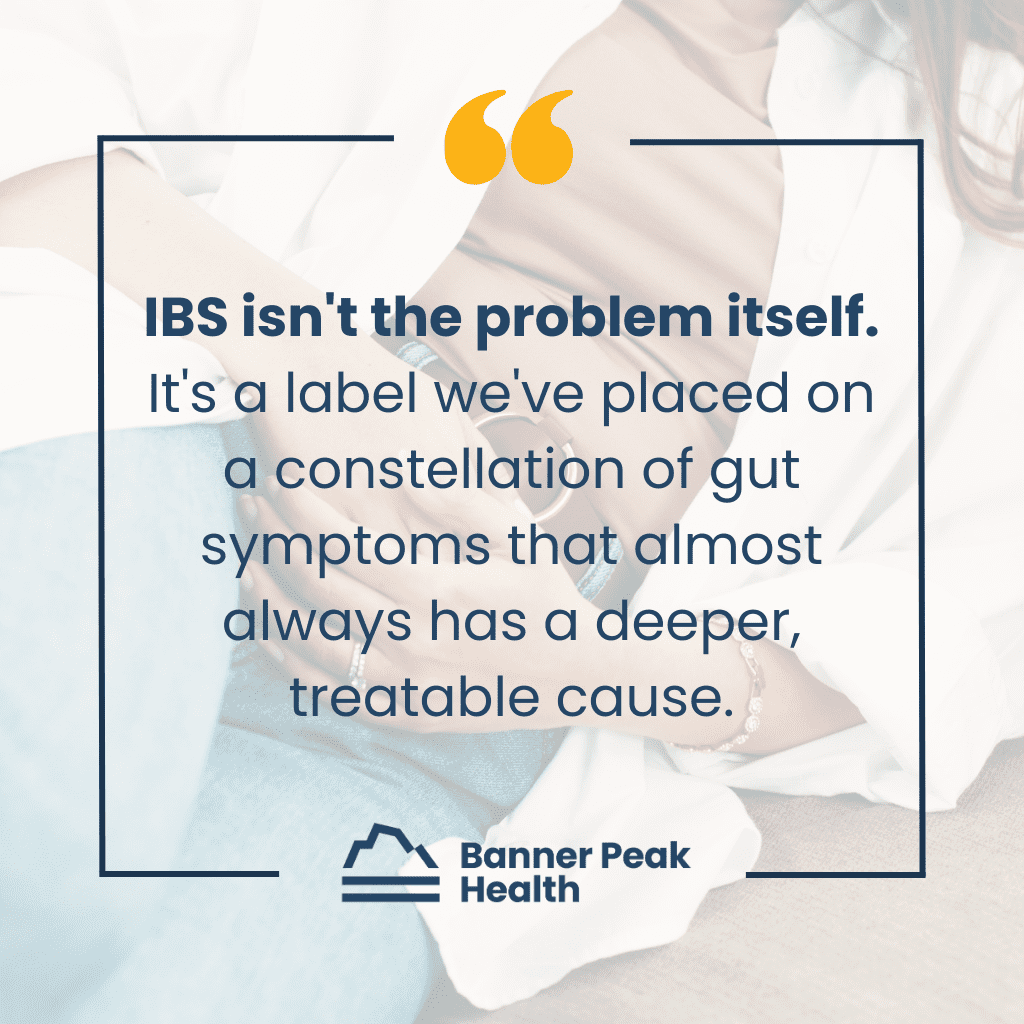
IBS isn’t the problem itself. It’s a label we’ve placed on a constellation of gut symptoms that almost always has a deeper, treatable cause.
About 60% of the time, that cause is SIBO, small bowel bacterial overgrowth. If you’re struggling to understand SIBO vs. IBS, you’re asking the right question.
What Is IBS (and Why Has It Been So Misunderstood)?
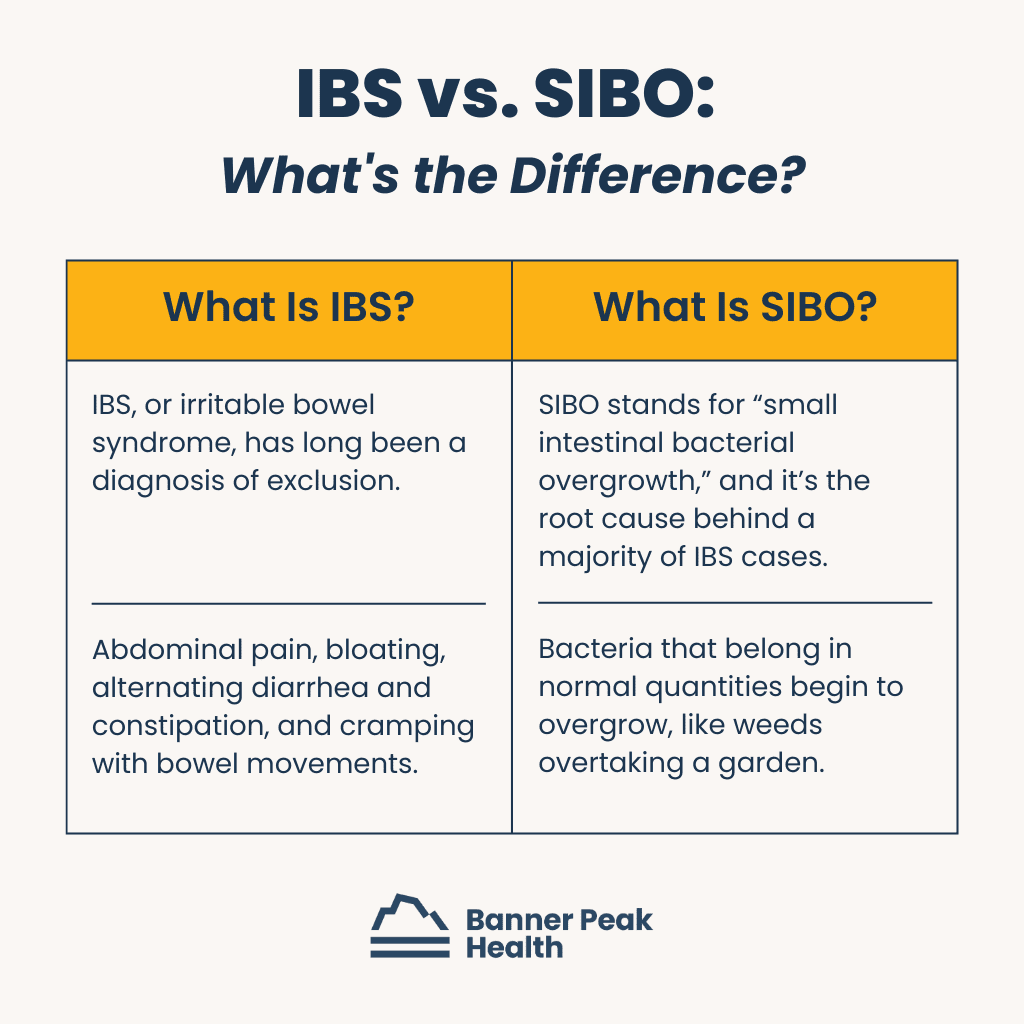
IBS, or irritable bowel syndrome, has long been a diagnosis of exclusion. A patient reports abdominal pain, bloating that worsens throughout the day, alternating diarrhea and constipation, and cramping with bowel movements.
The gastroenterologist runs blood work, imaging, and endoscopy. When those tests come back clean, the patient receives the IBS label.
The Rome criteria, a symptom-based framework, have been used to formally diagnose IBS through several iterations. Gastroenterologists are moving away from this framework, though, and toward a more investigative approach that searches for the condition behind the symptoms.
For too long, the standard of care was limited to treating symptoms with motility agents, anti-diarrheal medications, or antidepressants for pain. These medications addressed what a patient felt, not why they felt it. If you’ve been told your bloodwork looks normal and handed a prescription for your symptoms, you’re not alone.
What Is SIBO?
SIBO stands for “small intestinal bacterial overgrowth,” and it’s the root cause behind a majority of IBS cases.
In a healthy gut, a diverse population of bacteria lives in balance within the small intestine. This microbiome, as we call it, produces hormones, regulates inflammation, and contributes to immune function.
Certain bacterial populations even produce GLP-1, the same hormone that GLP-1 agonist medications mimic for weight loss and blood sugar control. A healthy microbiome depends on diversity and proper ratios of different bacterial species.
SIBO occurs when the diversity in the gut microbiome breaks down. Bacteria that belong in normal quantities begin to overgrow, like weeds overtaking a garden. These overgrown populations produce excess gas, create persistent inflammation, and damage the gut’s mucosal barrier. Once that barrier weakens, substances leak through the intestinal wall and trigger immune responses that worsen the cycle.
The bacteria in our gut communicate with each other through chemical messengers. When the wrong populations dominate, these signals shift toward inflammation and immune dysfunction rather than the hormonal and metabolic processes that keep us healthy.
How Food Poisoning Leads to SIBO and IBS
The connection between SIBO and IBS often traces back to food poisoning.
A patient can get gastroenteritis from a virus, a bacterial infection, or contaminated food. The bacteria (most commonly Campylobacter) release a toxin called cytolethal distending toxin B, or CdtB. The immune system mounts a response against this toxin, which is appropriate.
The problem is that CdtB’s surface looks remarkably similar to a human protein called vinculin. Vinculin controls motility and pain sensation in the gut. Once the immune system creates antibodies against CdtB, those antibodies cross-react with vinculin. The nerves that regulate normal bowel movement are now under attack from the patient’s own immune response.
This is the mechanism through which food poisoning can cause SIBO and, through SIBO, can cause IBS. A 2017 meta-analysis found that one in seven people who experience bacterial gastroenteritis go on to develop IBS.
The California Department of Public Health estimates about 200,000 Californians contract Campylobacter infections each year. It’s one of the state’s most common foodborne illnesses. Every one of those infections carries the potential to trigger this cascade.
A patient might get food poisoning on a trip to Mexico at 18 and spend the next 12 years dealing with unexplained gut symptoms and digestive issues before anyone connects the dots.
Symptoms of SIBO vs. IBS: Why They Overlap
Symptoms of SIBO vs. IBS look identical: IBS is the symptom picture, and SIBO is often the condition producing it. Bloating, gas, abdominal pain, diarrhea, constipation, and cramping appear in both diagnoses. Patients frequently report a flat stomach in the morning that becomes distended and uncomfortable by evening.
Distinguishing SIBO from IBS based on symptoms alone isn’t practical. The overlap is too complete. Instead, we test for bacterial overgrowth.
Different subtypes of SIBO produce different symptom patterns. Methanogenic SIBO, for instance, tends toward constipation, and hydrogen-dominant SIBO more commonly presents with diarrhea. Identifying the specific subtype allows us to tailor treatment to each patient based on the type of bacterial overgrowth involved.
Diagnosing SIBO vs. IBS
The overgrown bacteria in the small intestine produce byproducts that convert into measurable gases. We exhale these gases, and breath tests can detect their levels. A positive breath test confirms bacterial overgrowth and helps identify the subtype of SIBO present.
Breath testing changes how we approach gut symptoms. Instead of guessing, we can measure directly and monitor treatment progress over time. If a patient responds to therapy, repeat testing confirms the bacterial overgrowth is resolving.
When a breath test comes back negative, we move to other investigations: gastric emptying studies to evaluate motility, food sensitivity testing, and a review of the patient’s medical history. Patients who’ve had their gallbladder removed, for example, sometimes develop bile acid diarrhea that mimics IBS symptoms. A thorough evaluation of each patient helps us identify these less common causes.
Treating SIBO vs. IBS: Beyond Symptom Management
Once we identify the root cause, treatment gets specific.
For confirmed SIBO, the antibiotic rifaximin targets the bacterial overgrowth. This antibiotic works primarily within the gut, which limits systemic side effects. Depending on the SIBO subtype, the treatment protocol may differ.
Low FODMAP diets have gained recognition for IBS relief, and the reason they work often traces back to SIBO. FODMAPs (fermentable oligosaccharides, disaccharides, monosaccharides, and polyols) feed the overgrown bacteria. Restricting these foods starves the excess bacterial populations and reduces gas, bloating, and pain.
After a restriction period, we gradually reintroduce foods to identify which specific FODMAPs a patient tolerates.
The advantage of knowing the root cause is precision. We can combine antibiotic therapy with dietary changes, monitor bacterial levels with retesting, and adjust the approach based on the data. Compare that to the old model: take this medication for your pain, eat less fiber, and hope for the best.
At Banner Peak Health, we prefer to find and fix the cause rather than mask the symptoms.
Other IBS Causes Outside of SIBO
SIBO accounts for about 60% of IBS cases. The remaining 40% have other identifiable causes.
Bile acid diarrhea affects patients whose digestive systems produce or manage bile acids poorly, especially those who’ve had gallbladder surgery. The excess bile irritates the bowel lining and produces symptoms that look identical to IBS.
Food allergies and intolerances can produce the same bloating, cramping, and irregular bowel patterns. These are distinct from SIBO and require different testing and treatment approaches. A careful dietary evaluation can identify triggers that standard IBS protocols overlook.
The gut-brain axis and stress response play a real role in bowel function. Chronic stress alters gut motility, increases visceral sensitivity, and can shift the composition of the microbiome. Stress doesn’t cause IBS in the way patients were told for years (“It’s all in your head”), but it can contribute to the same downstream effects: slowed motility, bacterial backup, and overgrowth.
Depression and anxiety affect the parasympathetic nervous system, which controls intestinal movement. Reduced motility allows bacteria to accumulate and create the conditions for SIBO.
The relationship is bidirectional. SIBO can cause IBS symptoms through bacterial overgrowth and inflammation. And IBS can cause SIBO when dysfunctional motility patterns (slowed gut movement, stress responses, impaired clearing mechanisms) allow bacteria to accumulate.
The mental health connection is real and valid, even if previous generations of physicians used it as a dismissal rather than a starting point for investigation.
Today’s Takeaways
IBS is not a life sentence. It’s not all in your head. It’s not anxiety manifesting as stomach pain. It’s a real condition with identifiable root causes, and those causes can be found and addressed.
When patients ask about SIBO or IBS, the answer is often both: IBS symptoms almost always point to an underlying condition we can test for. Whether the answer is SIBO, bile acid dysfunction, food sensitivities, or motility issues related to the gut-brain connection, the distinction between SIBO vs. IBS matters less than finding the cause.
You deserve answers, not decades of frustration. If you’ve been told your tests are normal and handed prescriptions that mask your symptoms, consider whether anyone has actually tested you for SIBO or other treatable causes.
At Banner Peak Health, that’s where we start.