
We’re in the middle of a revolution in sleep medicine, and I don’t use that word lightly.
For decades, the way we diagnosed and treated obstructive sleep apnea (OSA) followed a rigid, outdated playbook. A patient presented with obvious red flags: loud snoring, obesity, a neck circumference over 17 inches. We’d order an overnight polysomnogram at a sleep study facility, a cumbersome, expensive test that required 22 wires attached to the body.
The data captured a single night’s sleep, which may or may not have been representative. If we found OSA, we prescribed a CPAP machine with tubes and masks, and long-term compliance hovered below 50% of patients.
That model had two massive problems. First, the diagnostic threshold was so high (the testing was too expensive and inconvenient) that countless people with milder forms of sleep apnea went undetected. Second, the people we did identify often couldn’t tolerate the treatment.
The revolution has arrived, and it’s changed both sides of the equation: how we diagnose OSA and how we treat it. Cheaper, easier, multi-night monitoring tools have lowered the diagnostic bar, and a growing menu of non-CPAP treatment options has given us alternatives for mild-to-moderate cases.
Sleep apnea treatment without CPAP is now a clinical reality for a significant subset of patients.
What Is Obstructive Sleep Apnea?
We lose muscle tone during sleep. That loss increases the risk of the tongue falling backward and the throat muscles collapsing. When this happens, the result is partial or complete blockage of the upper airway, interfering with air passage to and from the lungs.
This interference reduces the amount of oxygen reaching the body and brain and triggers an adrenaline release that disrupts normal sleep.
Normal sleep physiology occurs in stages. OSA disrupts these stages by interfering with breathing, causing a cascade of serious problems.
In the short term, OSA can cause poor memory, headaches, and fatigue severe enough to make patients fall asleep driving. Long-term complications include increased risk of obstructive airway disease, heart attacks and congestive heart failure, non-alcoholic fatty liver disease, non-insulin-dependent diabetes, high blood pressure, insulin resistance, atrial fibrillation, and dementia.
Obstructive Sleep Apnea’s Impact on Hormones
OSA increases the release of stress hormones like adrenaline and epinephrine. It simultaneously reduces production of the hormones our bodies need most.
Beneficial hormones OSA reduces:
- Human growth hormone (HGH): Repairs and builds muscles.
- Testosterone: Maintains sexual function and healthy body composition in terms of muscle mass and fat distribution.
- Estrogen: Maintains healthy body composition and bone health.
Potentially harmful hormones OSA increases:
- Cortisol: Impairs immune function and increases the risk of obesity.
- Leptin: Decreases satiety.
- Ghrelin: Increases appetite.
Low testosterone is a common finding in patients with untreated sleep apnea. If you’ve been told your levels are low, it’s worth exploring whether OSA could be the culprit. Learn more about ways to naturally boost testosterone levels.
How Sleep Apnea Affects Athletic Performance
OSA impairs day-to-day functioning and athletic performance. Strength, endurance, and cognition all suffer.
In 2013, the Journal of Clinical Sleep Medicine examined 12 male, middle-aged golfers with severe OSA. The golfers underwent CPAP treatment, and after 20 rounds of golf, researchers evaluated every golfer’s handicap index.
The non-OSA control group showed no improvement. The OSA group treated with CPAP improved by 11.3%, and the more skilled players (handicap index below 12) improved by 31.5%.
I’m not a golfer, but I’ve worked with many and have recognized their devotion to the sport. This study proved they’ll go to any length to improve their game.
Golf relies on cognitive abilities to strategize and calculate risk/return, physical endurance for strength and accuracy, and emotional control to manage pressure. All these abilities improve with adequate sleep. Sleep’s effect on athletic performance is one of the most compelling arguments for diagnosing and treating OSA.
CPAP: Still the Gold Standard for Severe Cases
CPAP (continuous positive airway pressure) delivers pressurized air as you sleep to keep the airway open. For severe OSA, or mild-to-moderate OSA with risk factors for complications like heart attack, atrial fibrillation, stroke, or dementia and cognitive decline, a CPAP machine remains the first-choice treatment.
Unfortunately, for most people, CPAP evokes Darth Vader: a face obscured behind a large mask. Thankfully, CPAP machines have come a long way since their inception in the 1980s. They’re no longer vacuum cleaner-esque appliances, and even the full-face models are whisper-quiet.
If you can’t stand the thought of re-enacting the “Luke, I am your father” scene with your spouse every night, plenty of variations exist.
But here’s the fundamental problem: compliance rates remain stubbornly low. When less than half of prescribed CPAP users stick with the treatment, we need other options. The demand for sleep apnea treatment without CPAP has never been greater, and that’s exactly what the revolution in sleep medicine has provided.
The Revolution in Sleep Apnea Diagnosis
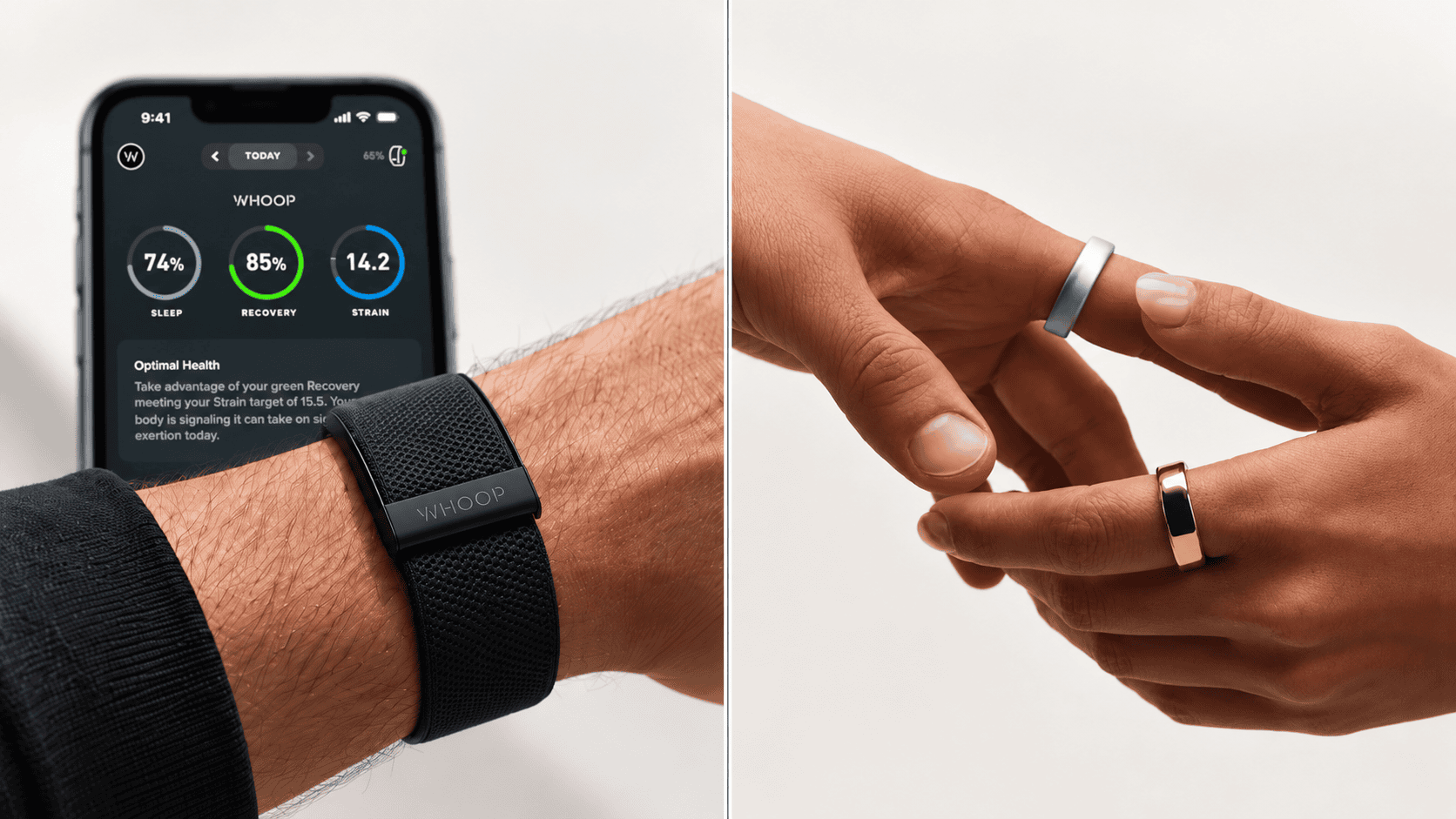
At Banner Peak Health, we partner with Empower Sleep and use their SleepImage device: an FDA-approved rubberized ring worn at the bedside. After more than two years of experience with our patients, this approach has changed how we practice sleep medicine.
The advantages over a traditional polysomnogram are dramatic. The device is cheap enough and easy enough that we don’t face the financial or logistic barriers of only testing the most obvious cases. We can screen broadly.
Unlike a single-night sleep study (conducted with 22 wires attached to your body in an unfamiliar facility), wearable health technology like the SleepImage ring lets us monitor patients night after night, week after week.
Sleep has tremendous variance: good nights, bad nights. Capturing that richness over time gives us a far more accurate picture of any individual’s sleep health than one snapshot ever could.
Here’s what we’ve learned. Mild sleep apnea exists in far more people than we previously realized. It’s an occult risk factor for obesity, fatigue, low testosterone, high blood pressure, and heart rhythm disorders.
With better diagnostic tools, we’re finding and treating OSA in patients who would have gone undiagnosed under the old model.
The diagnostic revolution has driven a therapeutic one. Now that we can monitor patients longitudinally, we can run experiments, test interventions, and fine-tune treatment plans with real data.
For patients already using a CPAP machine, we can assess whether the machine is performing as intended and adjust accordingly. For patients with mild-to-moderate OSA who don’t need (or won’t tolerate) a CPAP, we have a new approach: stacking.
Sleep Apnea Treatment Without CPAP: Stacking Therapy
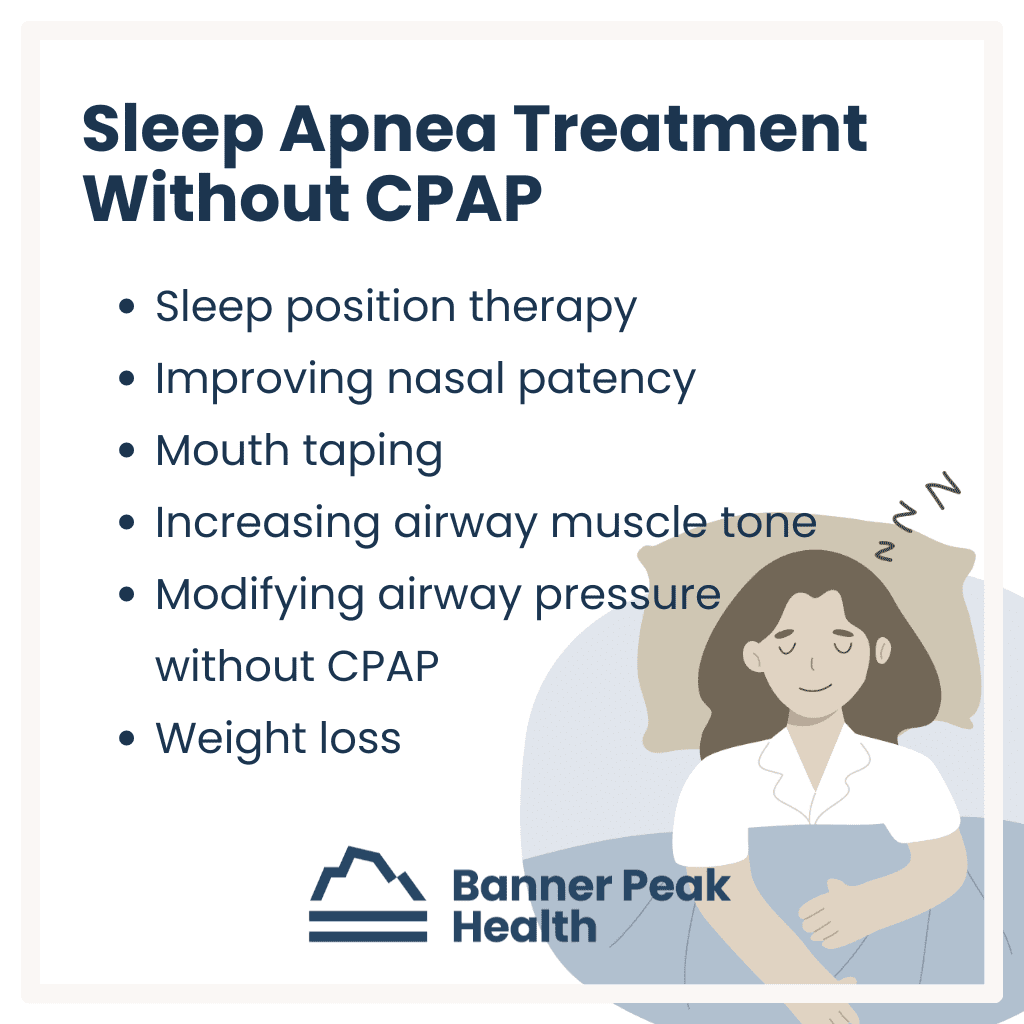
Stacking means combining multiple therapies. Each individual treatment may offer only a modest benefit on its own. Cobble them together, and the combined effect can produce a clinically meaningful improvement in obstructive sleep apnea, all without a CPAP machine.
The beauty of stacking is the trial-and-error process, guided by ongoing monitoring with the SleepImage ring. We try a modality, measure the result over multiple nights, add another, and measure again. Each person’s stack looks different based on their anatomy, sleep patterns, and preferences.
Sleep Position Therapy
Sleeping on the back (the supine position) worsens obstructive sleep apnea. Gravity compounds the risk of airway collapse. Side sleeping helps stabilize the throat muscles so they don’t interfere with air passage.
We use pillows, wedges, and specialized devices to help patients stay on their sides or stomachs during sleep. Positional therapy is one of the simplest forms of sleep apnea treatment without CPAP. With the SleepImage ring, we can verify whether these changes are making a measurable difference.
Improving Nasal Patency and Breathing
Our bodies evolved to breathe through the nose, but most people don’t breathe through their noses during sleep. This contributes directly to snoring and obstructive sleep apnea.
We address nasal breathing in layers. First, we work on nasal patency: improving airflow through the nostrils. Topical inhaled nasal glucocorticoids like Flonase shrink the mucosal lining and open the nasal passages.
We combine these sprays with nasal dilator devices to widen the passages further. You can learn more about these options in our guide to the best nasal sprays for congestion.
Once nasal patency improves, we train patients to stop mouth breathing through mouth taping. Mouth taping offers several benefits as a sleep apnea treatment without CPAP. Forcing air through the nose (instead of the mouth) tips the autonomic nervous system into better balance.
Mouth breathing physically lowers airway pressure and promotes collapse. When the mouth is closed, the tongue stays clamped in a more forward position, keeping the posterior airway clear.
Nasal breathing itself provides benefits beyond OSA. Explore our post on belly breathing benefits and techniques for more on optimizing your breathing patterns.
Increasing Airway Muscle Tone
Weak muscles lining the airway contribute to collapse during sleep. Strengthening them is another effective avenue for sleep apnea treatment without CPAP.
Excite OSA and the REMplenish Straw function like push-ups for the tongue, building tone in the muscles that support the airway. Mandibular advancement devices like myTAP and Zyppah bring the lower jaw forward. Since the lower jaw anchors the tongue, repositioning the jaw reduces the risk of the tongue falling back and obstructing the airway.
Modifying Airway Pressure Without CPAP
For patients who want some positive pressure support but can’t tolerate a full CPAP setup, Bongo Rx provides increased expiratory positive airway pressure. It’s a smaller, simpler device that adds one more layer to the stacking approach.
Weight Loss: A New Frontier in Sleep Apnea Treatment Without CPAP
Excess body weight, particularly around the neck and airway, is one of the most powerful drivers of obstructive sleep apnea. Weight loss has always been part of the treatment conversation, but a new class of medications has changed the calculus.
Tirzepatide (marketed as Zepbound) became the first FDA-approved medication for the treatment of moderate-to-severe OSA in adults with obesity. Two phase 3 clinical trials (the SURMOUNT-OSA studies) demonstrated substantial reductions in breathing interruptions during sleep. Participants on tirzepatide experienced a decrease of 25 to 29 events per hour, a meaningful improvement by any clinical measure.
We’ve written extensively about GLP-1 agonist side effects and the importance of weighing risks against benefits. That same caution applies here.
Zepbound’s data for OSA is compelling, and for patients whose obstructive sleep apnea is driven by obesity, this medication is a powerful new tool. At Banner Peak Health, we’re watching this space closely and incorporating it into our treatment conversations when appropriate.
Today’s Takeaways
Sleep is the foundation of good health. That’s why Banner Peak Health stays at the forefront of sleep science.
The old model of sleep apnea care (test only the sickest, prescribe only CPAP) left too many patients undiagnosed and undertreated. With longitudinal monitoring through tools like the SleepImage ring, we’re identifying mild-to-moderate OSA in patients who would have fallen through the cracks. And with stacking therapy, we’re treating them with personalized, tolerable, non-CPAP options.
If you snore, feel fatigued, or have risk factors for OSA, don’t wait for obvious symptoms to appear. Reach out to us today. We can screen for sleep apnea quickly and comfortably, and if treatment is needed, we have more options than ever.
Optimizing your sleep can improve your body temperature regulation at night, energy, cognition, and cardiovascular health.