

The short answer is yes. Perimenopause can cause nausea, and if you’re experiencing it, you’re not imagining things.
Nausea falls under a broader umbrella of gastrointestinal symptoms associated with perimenopause. Estrogen and progesterone fluctuations drive these digestive symptoms, and they deserve more attention than most women receive.
When a woman in her 40s or early 50s walks into my office describing nausea, bloating, changes in bowel habits, irritability, joint pain, and sleep disruptions, I look for what ties them together. Each symptom may seem unrelated on its own. The hormonal shifts of perimenopause can connect them all.
How Fluctuating Hormones Cause Perimenopause Nausea
The mechanism comes down to two hormones and their effects on the gut-brain axis.
Estrogen amplifies serotonin-mediated signaling between the gut and the brain. According to a review in Current Psychiatry Reports, estrogen increases serotonergic responsivity, boosts the number of serotonin receptors, and facilitates serotonin synthesis and transport.
Progesterone slows the pace of digestion. When estrogen and progesterone fluctuate during perimenopause, the neurotransmitter systems that adapted to a stable hormonal environment lose their equilibrium.
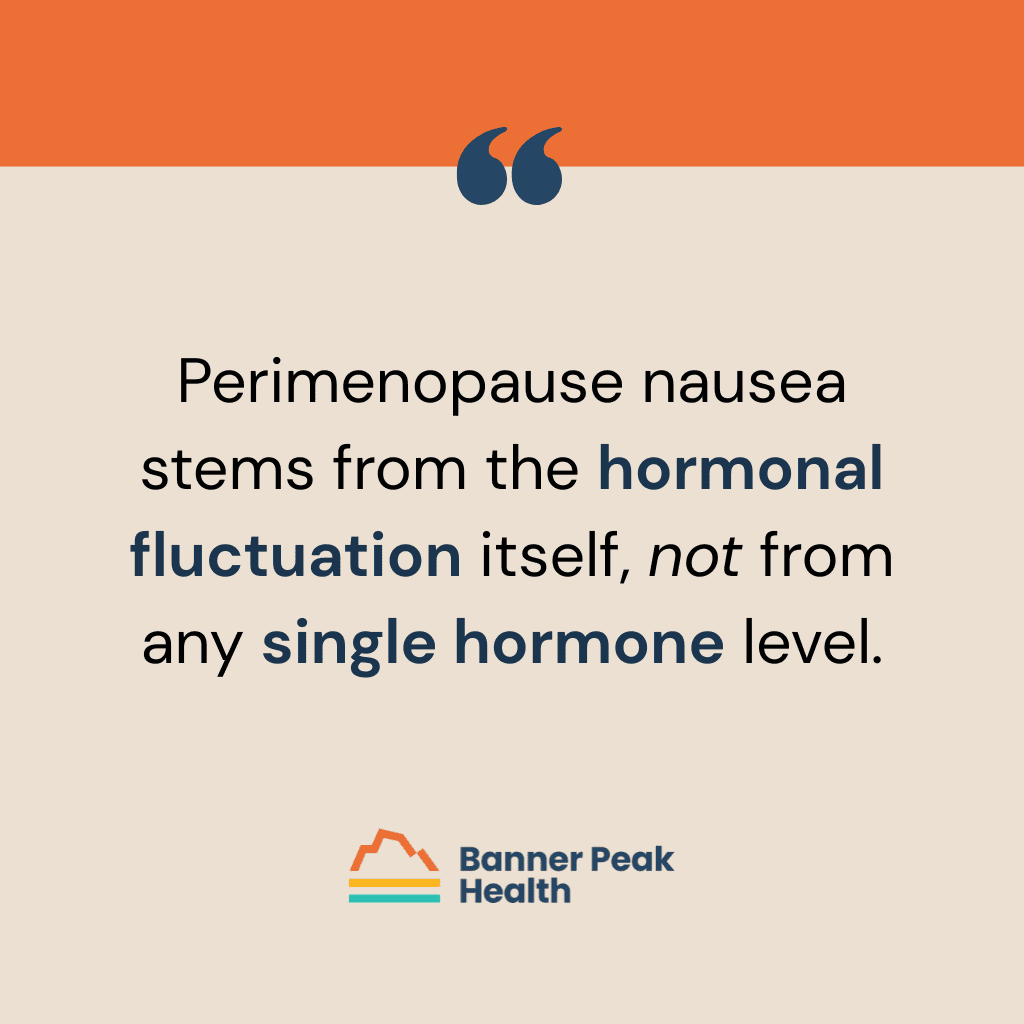
Perimenopause nausea stems from the hormonal fluctuation itself, not from any single hormone level. One day the tank is full; the next day it’s empty. The body’s systems can’t keep up with those swings.
The hot flash is the most familiar example of hormonal destabilization. Estrogen fluctuation disrupts the body’s temperature set point, triggering that sudden wave of heat. The same type of hormonal instability affects the gut.
When estrogen drops sharply, it triggers dysregulation of serotonin transport. The sudden estrogen decline creates a transient serotonin deficit that manifests as nausea, mood changes, and heightened visceral sensitivity (increased gut reactivity and digestive distress). The gut-brain connection means hormonal instability in one system creates consequences in the other.
The Perimenopause Symptom Cluster Most Doctors Miss
Hormonal nausea tends to show up alongside a cluster of symptoms that most women don’t associate with hormonal changes. The perimenopause symptom cluster, which often includes nausea, goes unrecognized by patients and physicians for months or years.
The symptoms I see most often include bloating, changes in bowel habits, increased irritability, joint pain, trouble sleeping through the night, and hot flashes. The specific combination looks different in every patient. Some women experience one or two of these; others deal with all of them at once.
The challenge is that none of these symptoms point to perimenopause in isolation. A woman with nausea visits a gastroenterologist. Joint pain sends her to a rheumatologist.
Sleep problems lead to a sleep specialist. No one steps back to see the full picture.
A 2025 study presented at The Menopause Society found that 94% of perimenopausal and menopausal women reported digestive symptoms, and 82% said those symptoms began or worsened during the menopausal transition. The prevalence data confirms what I see in my practice every week.
What Else Could Be Causing Your Nausea
My approach starts with ruling out the most important possibilities. Nausea in your 40s and 50s has a long list of potential causes, and a thorough evaluation considers all of them before pointing to hormones.
A responsible evaluation of nausea in perimenopause starts with ruling out conditions that produce similar symptoms. I check for thyroid abnormalities, assess for irritable bowel syndrome (IBS) and small intestinal bacterial overgrowth (SIBO), and screen for gastroparesis.
Medication side effects are another common culprit. GLP-1 receptor agonist side effects frequently include nausea, and doctors now prescribe these medications widely for weight loss and diabetes. Any recent changes in prescription medications, diet, or lifestyle go on the list, too.
Only after working through these possibilities can I say, “That’s not it. Let’s look at the hormonal picture.”
Why Perimenopause Nausea Gets Dismissed
I’ve had a number of patients walk through my door with the same story: “For the last few years, I haven’t felt like myself. I’m not sleeping well, my joints hurt, and I’m more irritable. I just don’t feel great.”
These women have seen specialists. They’ve talked to their primary care doctor. The answer is the same every time: “Your labs look normal. You’re fine.”
Too often, physicians dismiss women with perimenopause nausea and other hormonal symptoms, tell them their labs look normal, and send them home without answers. A standard metabolic panel and CBC won’t capture the hormonal fluctuations driving perimenopause symptoms. These women aren’t fine; no one has asked them the right questions yet.
How We Evaluate and Treat Perimenopause Nausea
Any new, unexplained nausea warrants an evaluation. The first step is to rule out pregnancy. From there, a detailed history and physical lays the groundwork for identifying what’s behind the symptoms.
If the evaluation points to perimenopause after ruling out the conditions listed above, treatment options are available. I tell my patients: We have lots of tools in the toolbox, and not every tool is right for every patient.
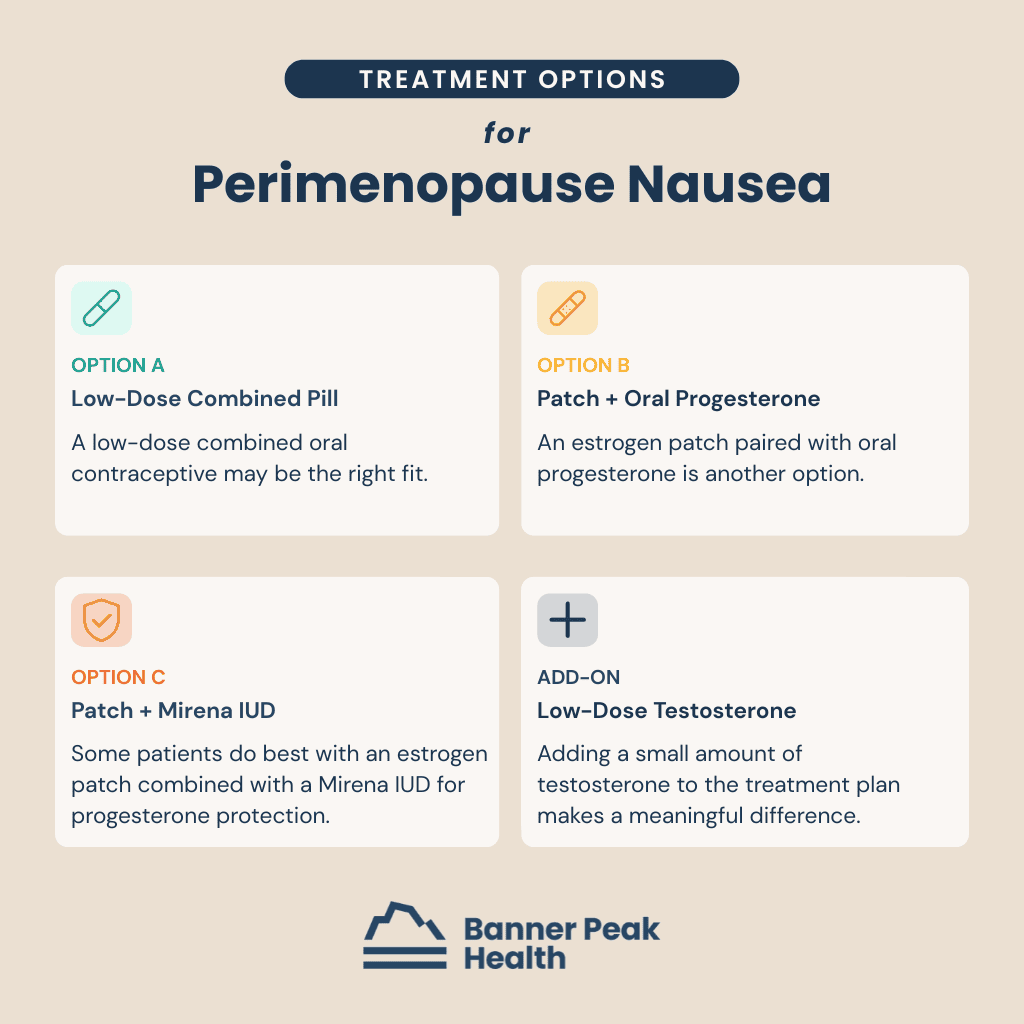
Treatment for perimenopause nausea and related symptoms requires a thorough, individualized approach built around each patient. A low-dose combined oral contraceptive may be the right fit.
An estrogen patch paired with oral progesterone is another option. Some patients do best with an estrogen patch combined with a progesterone IUD for endometrial protection.
In some cases, adding a small amount of testosterone to the treatment plan makes a meaningful difference. The goal is to identify what works for each patient through careful evaluation and ongoing adjustments.
Today’s Takeaways
If you’re dealing with new, unexplained nausea in your 40s or 50s, don’t dismiss it, and don’t let anyone dismiss it for you. Perimenopause can cause nausea. A thorough hormonal evaluation can help identify what’s driving your symptoms.
At Banner Peak Health, we approach perimenopause with the attention it requires. Every patient receives an individualized treatment plan built around her symptoms, her goals, and her life.
If you’re ready to get answers, schedule a consultation with us today.