
For years, I felt justified reaching for a glass of wine at the end of the day. Medical science seemed to back me up: moderate alcohol consumption was supposed to protect my heart and extend my life.
The medical community is now pulling the floor out from under this comfortable assumption. Does alcohol cause inflammation, and if so, how much damage does it actually do?
This question is getting more attention now than ever before, and the answer changes how physicians evaluate alcohol’s impact on the body. Through inflammation, alcohol exerts more damage than most people realize.
I’ve written about the pitfalls of nutritional research and the challenges of interpreting epidemiological data. Many of the same challenges apply to alcohol research, and the story starts with two competing graphs.
Does Alcohol Cause Inflammation at Every Dose?
For decades, the prevailing model for alcohol and health followed a J-shaped curve. The bottom of the J sat at “mild” consumption, suggesting a small amount of drinking carried less risk than drinking none at all. Moderate-to-heavy consumption then climbed steeply on the harm scale.
This J-curve felt reassuring. It gave mild drinkers a scientific excuse.
The problem is that the data behind the J-curve is riddled with confounders. The “no alcohol” group in most epidemiological studies isn’t a collection of people who simply chose not to drink. It includes recovering alcoholics who’ve already suffered organ damage, frail or chronically ill individuals, and people taking medications that interact badly with alcohol.
These confounders skewed the harm score for the zero-alcohol group, making mild drinking look protective by comparison.
The updated model is a straight line: zero alcohol equals zero harm, and every incremental dose increases the risk. This linear model reflects the direction of current medical consensus. The CDC now recognizes no beneficial amount of alcohol.

What Is Inflammation?
In the short term, inflammation is a coordinated response between the immune and nervous systems. A host of cells work together to fight acute threats, primarily infectious agents like viruses and bacteria. This defense is adaptive: mount a short-term battle, kill the invader, and heal.
The trouble begins when this system, built for short bursts, is stimulated chronically. Long-term inflammation becomes the opposite of protective: it damages tissues, disrupts organ function, and drives disease.
Alcohol causes inflammation, and this process is now recognized as one of the primary mechanisms by which drinking harms the body. Traditionally, we focused on alcohol’s direct toxicity to the liver. We now know alcohol causes inflammation in every organ system.
How Does Alcohol Cause Inflammation in the Body?
The pathway from a glass of wine to a system-wide inflammatory response involves several steps.
First, the liver breaks down alcohol into acetaldehyde, a directly toxic chemical. Acetaldehyde generates reactive oxygen species (free radicals) that damage liver tissue on contact. This isn’t an inflammatory mechanism; it’s direct chemical toxicity to the organ responsible for detoxifying the body.
Second, alcohol acts as a contact toxin to the lining of the digestive tract. The gut lining functions much like skin: it’s a barrier protecting the body’s interior from the contents passing through. This protection depends on tight junctions between cells lining the intestinal wall.
Alcohol disrupts these junctions, creating what’s known as “leaky gut.” Once the barrier breaks down, bacterial products like lipopolysaccharides (LPS) leak into the bloodstream. These trigger a potent immune response, releasing inflammatory chemicals (cytokines such as TNF-alpha and IL-6) that circulate through the entire body.
Third, alcohol disrupts the gut microbiome. Trillions of bacteria line our digestive tract, and our health is tied to the quality and diversity of these microbial communities.
Prebiotic supplements and gut health strategies can support beneficial bacteria, but alcohol works against them, killing off good strains and allowing harmful ones to flourish.
The result: a local insult in the gut and liver escalates into a body-wide inflammatory state affecting the brain, heart, bones, muscles, and immune system.
Does Even Moderate Alcohol Cause Inflammation?
The short answer is no. The latest alcohol guidelines from the CDC and WHO recognize no safe amount of alcohol from a health perspective.
The J-curve’s apparent benefits were artifacts of confounded epidemiological data, not genuine protective effects of moderate drinking.
Every incremental unit of alcohol confers greater physiologic harm. You can still enjoy a glass of Cabernet Sauvignon, but you can’t claim your doctor said it was good for you.
Alcohol-Related Inflammation: A Full-Body Impact
Does alcohol cause inflammation beyond the gut and liver? Absolutely. Once inflammatory cytokines enter the bloodstream, they reach every organ.
Here’s what the damage looks like in practice.
Liver
The liver is ground zero for alcohol-related damage. It metabolizes alcohol and bears the brunt of acetaldehyde’s toxicity. Over time, the damage follows a predictable progression: fatty liver (affecting 90–100% of heavy drinkers), steatohepatitis (active inflammation of the liver), and eventually fibrosis and cirrhosis (scarring).
Symptoms include fatigue, abdominal discomfort, and jaundice. End-stage liver disease can be fatal.
A routine metabolic panel can detect elevated liver enzymes long before symptoms appear, making regular blood testing one of the most practical early-warning tools.
Digestive Tract and Pancreas
Alcohol directly damages the intestinal lining and promotes leaky gut, as described above. The pancreas is especially vulnerable to alcohol-driven inflammation: pancreatitis can be acute or chronic, and both forms are serious.
Acute pancreatitis causes severe abdominal pain and can be life-threatening. Chronic pancreatitis leads to scarring and loss of function. If the disease destroys the tissue producing insulin, diabetes follows.
Brain
Inflammatory cytokines from the gut and liver cross into the brain, triggering neuroinflammation. Over time, this contributes to alcohol’s effects on the brain: changes in mood, impaired cognition, and structural brain damage.
Even a hangover demonstrates this principle in miniature. If you’ve ever experienced one, you’ve felt firsthand how alcohol disrupts neurological function.
The headache, brain fog, and irritability you feel after a night of drinking are a short-acting version of the same inflammatory process that, over years of heavy drinking, causes lasting harm.
Cardiovascular System
The claim that one or two glasses of wine per day protects the heart rested on confounded data. Wine drinkers tend to eat healthier diets and maintain other habits that promote heart health. The wine itself wasn’t the protective factor.
Alcohol, in a dose- and time-dependent fashion, can cause cardiomyopathy (damage to the heart muscle that weakens its ability to pump), atrial fibrillation (irregular heart rhythm), and elevated blood pressure. Multiple pathways exist for cardiovascular harm.
Immune System
The chronic inflammation alcohol causes overstimulates the immune system to the point it can no longer perform its primary job of defending the body from invading pathogens. The immune system becomes distracted, locked in a chronic inflammatory state, and loses effectiveness against acute threats.
Chronic drinkers face a higher risk of poor outcomes from infections like bacterial pneumonia. We observed this pattern during COVID-19.
Bones and Muscles
The same inflammatory cytokines that damage organs alter how the body metabolizes bone, increasing the risk of osteoporosis. The inflammation alcohol causes can accelerate muscle wasting (sarcopenia), making resistance training for longevity even more valuable for individuals who drink.
Cancer Risk
Alcohol is a confirmed risk factor for multiple cancers. The data is most notable for breast cancer: in women, even one drink per day can increase risk.
We’ve covered strategies for reducing your overall cancer risk in a previous post, and limiting alcohol intake is among the most impactful changes you can make.
What Happens When You Stop Drinking
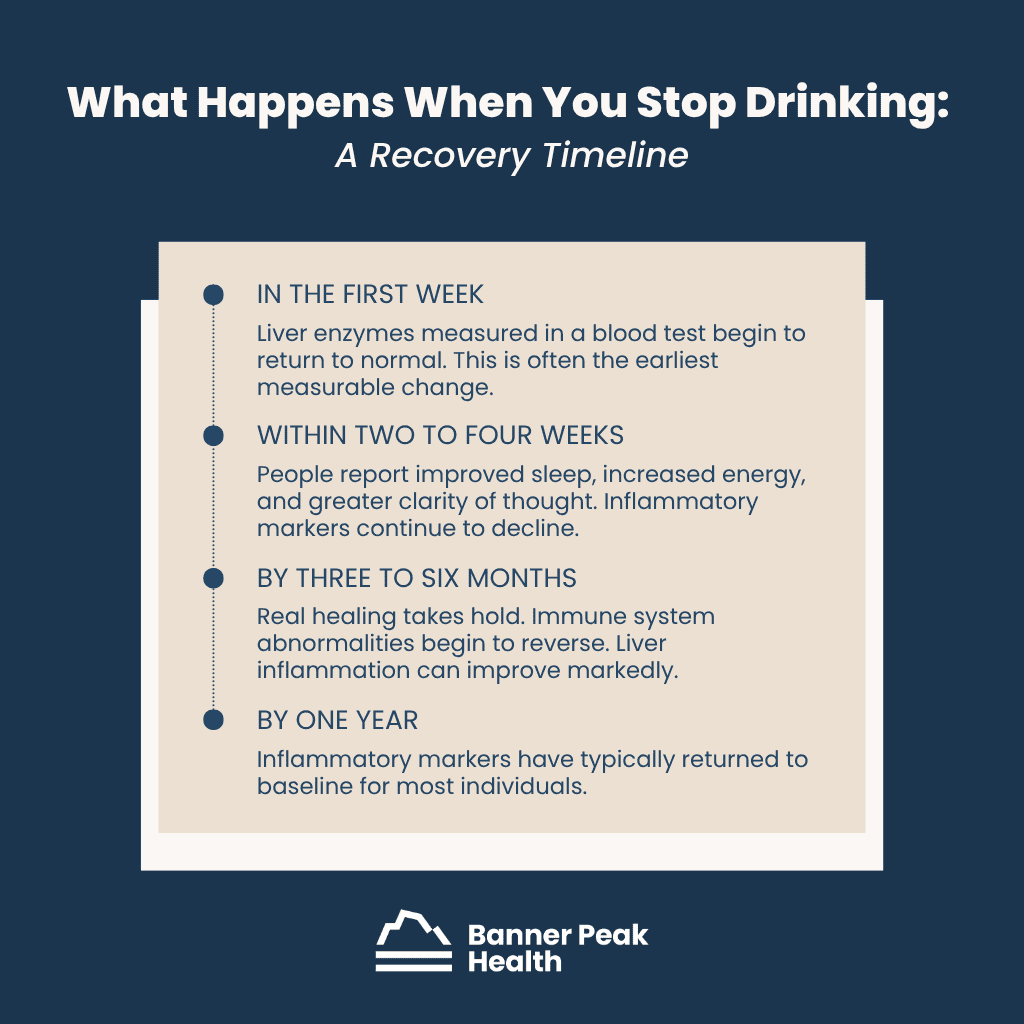
The body has a real capacity for recovery once alcohol is out of the equation. Here’s a general timeline.
In the first week, liver enzymes measured in a blood test begin to return to normal. This is often the earliest measurable change.
Within two to four weeks, people report improved sleep, increased energy, and greater clarity of thought. Inflammatory markers continue to decline.
By three to six months, real healing takes hold. Immune system abnormalities begin to reverse. Liver inflammation can improve markedly.
By one year, inflammatory markers have typically returned to baseline for most individuals.
The caveat: some damage is irreversible. Cirrhosis, structural brain damage, and advanced muscle wasting may not fully recover. The ongoing inflammatory process, however, will resolve once alcohol is no longer fueling it.
Today’s Takeaways
Alcohol has been part of human culture for as long as we’ve been human, and it serves real social and communal purposes. I’m not telling anyone how to live their life. I’m presenting the data so you can make a clear-eyed decision about your own risks and benefits.
Those risks have been underplayed for too long. We now know that alcohol causes inflammation throughout the body, not just in the liver, and this inflammation drives disease in nearly every organ system.
The old J-curve gave us permission to pour another drink. The straight line takes that permission away.
To get a personalized assessment of how alcohol is affecting your body, work with your physician. At Banner Peak Health, this is part of what we do: through a thorough executive physical and ongoing care, we help our members weigh the risks and benefits of lifestyle choices, including alcohol use, with data to back them up.