

Fall is coming. The days are getting shorter, kids are back in school, and once again it’s time for Banner Peak Health’s annual vaccine update.
We’re covering our recommendations for influenza, respiratory syncytial virus (RSV), and COVID vaccines, along with an extra credit section on the potential benefits of azelastine nasal spray in reducing infection risk.
Influenza Vaccine
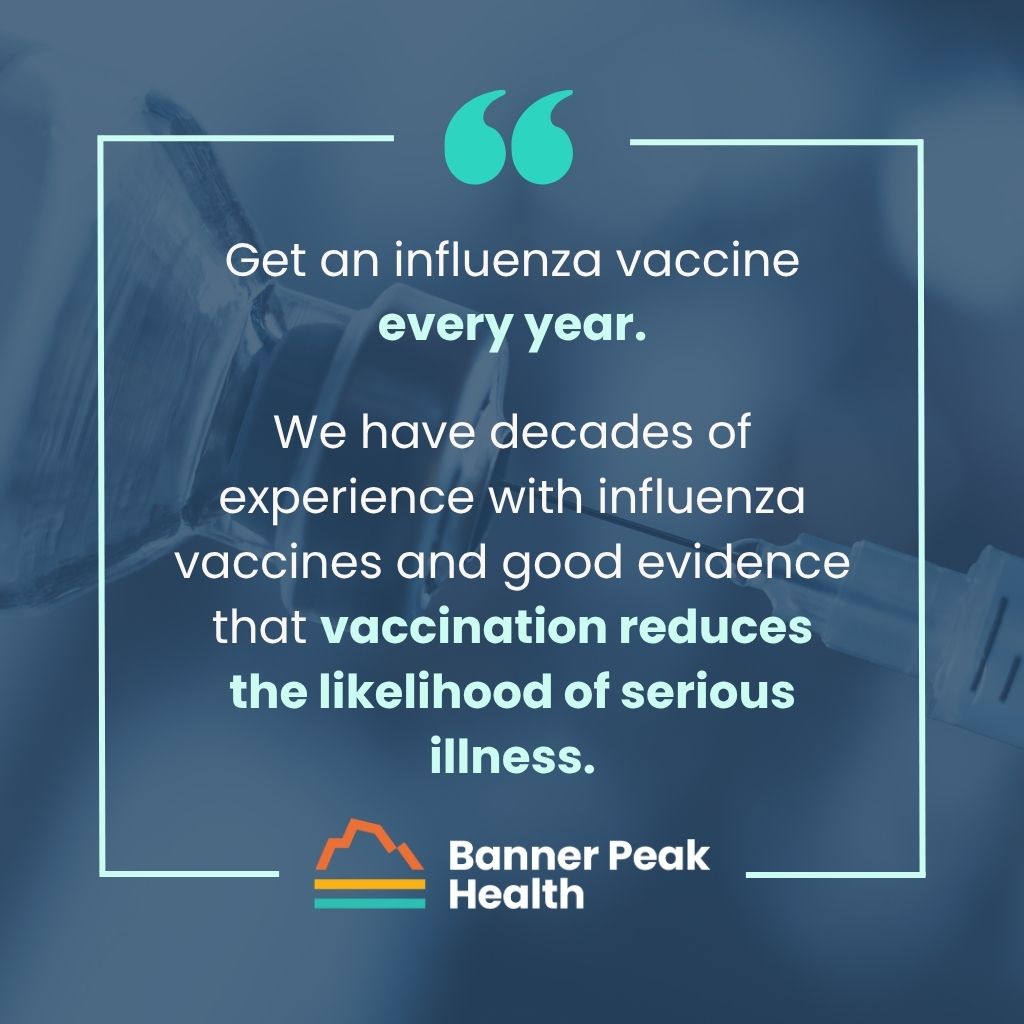
Let’s start with the easy one: Get an influenza vaccine every year.
Influenza continues to cause substantial illness, hospitalization, and death, particularly among older adults. We have decades of experience with influenza vaccines and good evidence that vaccination reduces the likelihood of serious illness.
This year’s influenza vaccine is trivalent, meaning it protects against three influenza viruses expected to circulate: two influenza A viruses (H1N1 and H3N2) and one influenza B virus. The specific strains have been updated for the 2026–2027 season to better match the influenza viruses expected to circulate this winter.
Why We Prefer Flublok
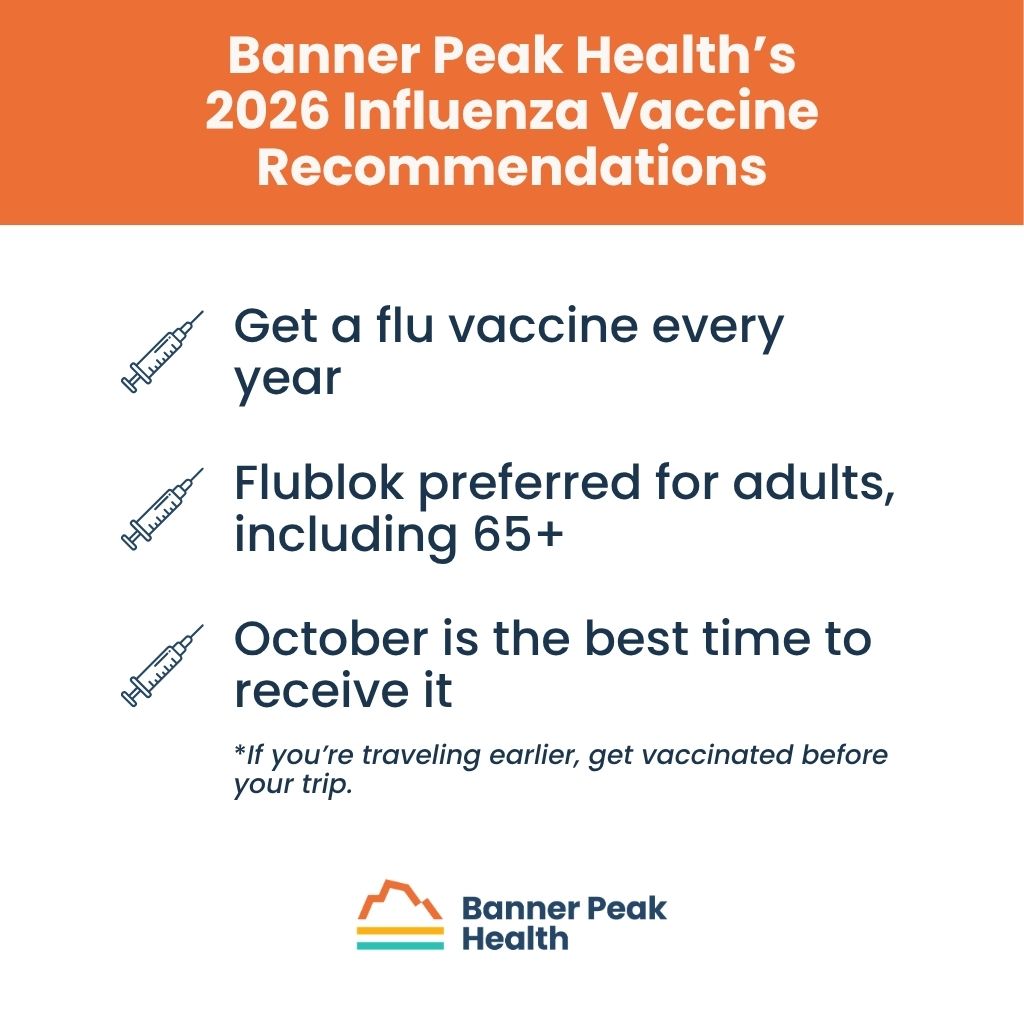
This year, Flublok® is our preferred influenza vaccine for our adult patients, including those over 65.
Flublok has two important advantages.
First, it contains three times as much influenza hemagglutinin (HA) antigen as a standard-dose influenza vaccine. Hemagglutinin is the part of the influenza virus the immune system learns to recognize. More antigen provides a stronger stimulus to the immune system, which is particularly useful as our immune response weakens with age.
Second, Flublok is manufactured differently.
Traditional influenza vaccines are produced by growing influenza virus in chicken eggs. Unfortunately, influenza viruses don’t particularly care that vaccine manufacturers would like them to remain unchanged.
As they adapt to growing in eggs, small mutations can occur. These “egg-adaptive” changes can make the resulting vaccine slightly different from the influenza virus circulating in people.
Flublok avoids this problem. It uses recombinant technology to manufacture the influenza protein directly rather than growing the virus in eggs. The result is a vaccine antigen that more precisely matches the strain selected for that year’s vaccine.
For people 65 and older, several enhanced influenza vaccines are available. All are reasonable choices. At Banner Peak Health, we prefer Flublok.
When to Get Vaccinated
We recommend receiving your influenza vaccine in October, rather than rushing out to get it as soon as pharmacies start advertising flu shots.
Protection is strongest during the months immediately following vaccination. Influenza season in California can extend well into the spring, so waiting until October shifts that window of maximum protection later.
One exception: travel beats perfect timing. If you’re taking a major trip in September or October, get vaccinated at least a couple of weeks before you leave.
Key Influenza Vaccine Points:
- Get an influenza vaccine every year.
- We prefer Flublok for our adult patients, including those over 65.
- October is the best time to receive it.
- If you’re traveling earlier, get vaccinated before your trip.
RSV Vaccine
RSV, or respiratory syncytial virus, usually causes what feels like a bad cold. But as we get older, it becomes a more consequential disease.
RSV can cause pneumonia, worsen heart or lung disease, and lead to hospitalization. The greatest risks occur in older adults, particularly people over 75 and those with significant chronic medical conditions.
When RSV vaccines first became available in 2023, we were cautious. Initial clinical trials confirmed the vaccines prevented RSV illness, but little evidence showed they prevented the outcomes we cared about most: hospitalization and death. Early data raised concerns about rare neurologic complications, too.
Three years of additional experience have made us considerably more comfortable with these vaccines.
Our preferred RSV vaccine is Pfizer’s Abrysvo®.
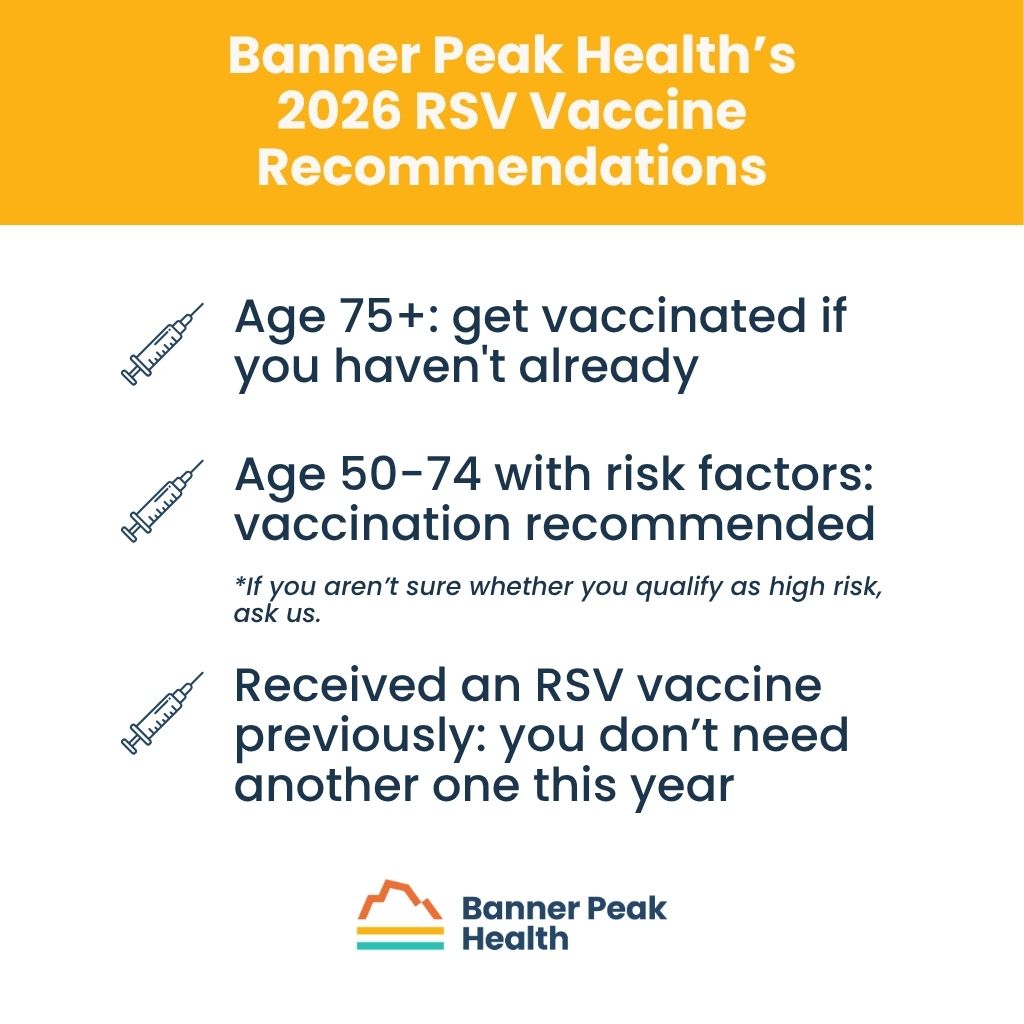
For people who haven’t been vaccinated, we recommend RSV vaccination for everyone 75 and older and for adults 50–74 who have medical conditions that put them at increased risk for severe RSV. These include significant heart or lung disease, diabetes with complications, chronic kidney disease, immune suppression, frailty, and residence in a nursing or assisted-living facility.
Unlike the flu vaccine, RSV vaccination isn’t an annual event. If you’ve already received an RSV vaccine, you don’t need another one this year.
Key RSV Vaccine Points:
- If you’re 75 or older, get an RSV vaccine if you haven’t already.
- If you’re 50–74 and at increased risk, we recommend vaccination.
- RSV vaccination isn’t currently an annual vaccine.
- If you received an RSV vaccine previously, you don’t need another one this year.
- If you aren’t sure whether you qualify as high risk, ask us.
COVID Vaccine
Like the influenza vaccine, the COVID vaccine is updated to better match circulating strains. For 2026–2027, the vaccine has been updated to target XFG, a descendant of the Omicron JN.1 family.
Think of this in much the same way as the annual influenza vaccine. We aren’t starting over every year. We’re updating the photograph we show your immune system so it more closely resembles the virus it’s likely to encounter.
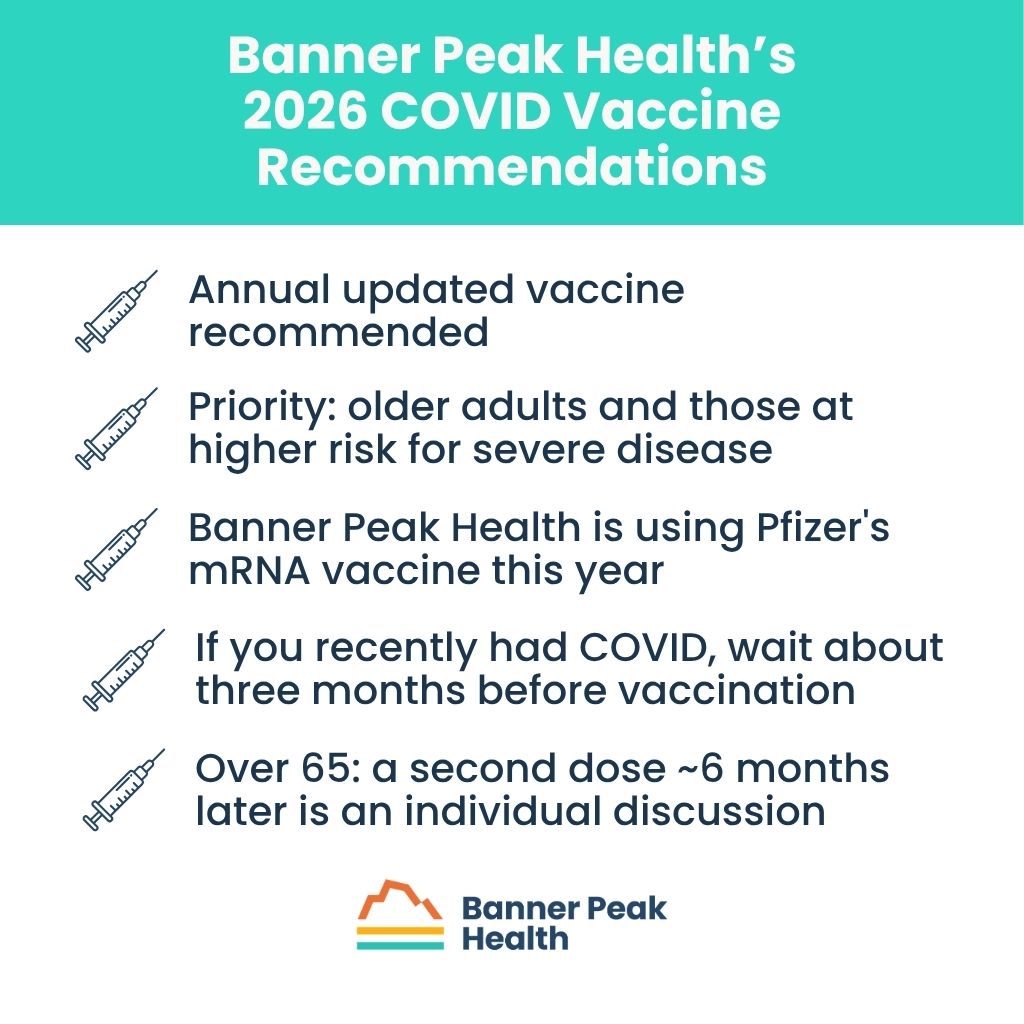
Banner Peak Health is using Pfizer’s updated mRNA COVID vaccine this year.
COVID vaccination is much better at preventing serious disease than at preventing every COVID infection. You can be appropriately vaccinated and still get COVID. The more meaningful question is whether vaccination decreases your chance of becoming seriously ill.
For older and higher-risk adults, the answer is yes.
Once a Year or Twice a Year After 65?
This is where things become less black and white.
Protection from COVID vaccination declines with time, and older adults tend to lose that protection more quickly. That creates a reasonable argument for giving some people over 65 a second COVID vaccination about six months after their fall vaccination.
But should everyone over 65 automatically get two COVID vaccines every year?
We don’t think the evidence supports such a simple rule.
An active, healthy 66-year-old with previous COVID infections and no major medical problems is very different from an 82-year-old with heart disease, diabetes, and chronic lung disease.
Our approach is to individualize the decision. We favor a second dose about six months later for the oldest and highest-risk patients. For healthy adults in their late 60s and early 70s, one updated vaccine each year may be reasonable.
If you recently had COVID, you don’t need to rush to get vaccinated. Your infection has just stimulated your immune system. In most circumstances, waiting about three months before vaccination is reasonable.
Key COVID Vaccine Points:
- COVID vaccination is most valuable for preventing severe disease, hospitalization, and death.
- Older adults and people with significant medical conditions derive the greatest benefit.
- This year’s vaccine has been updated to target XFG.
- Banner Peak Health is using Pfizer’s mRNA COVID vaccine this year.
- If you recently had COVID, you can wait about three months before vaccination.
- For adults over 65, whether to receive another dose about six months later is an individualized decision. The older and higher risk you are, the stronger the argument for another dose.
Can I Get My Flu and COVID Vaccines Together?
Yes.
You can receive influenza and COVID vaccines at the same visit. Most people don’t need to separate them.
Separating them is fine if you tend to feel poorly after vaccination and would rather deal with one at a time.
We’re somewhat more inclined to give the RSV vaccine separately. It’s still relatively new and needs to be observed more closely for side effects.
Extra Credit: A Nasal Spray to Reduce Your Risk?
Vaccines improve your immune system’s ability to fight COVID after you’re exposed. But what if you could make it harder for the virus to get in the door in the first place?
We covered how nasal sprays may prevent COVID in a previous post, and a new clinical trial strengthens the case.
Azelastine is an inexpensive, over-the-counter antihistamine nasal spray used for decades to treat allergies. COVID and many other respiratory viruses initially establish themselves in the nose, making the nasal passages a logical place to try to prevent infection.
In 2025, researchers published the CONTAIN trial, involving 450 healthy adults who used either azelastine nasal spray or a placebo three times daily for 56 days.
The results were impressive: 2.2% of people using azelastine developed COVID compared with 6.7% using placebo, a roughly 69% reduction in risk. The azelastine group had fewer rhinovirus infections, too, one of the viruses behind the common cold.
This was one relatively small study, so we need more trials to confirm the benefit. But azelastine is inexpensive, available without a prescription, and has been used safely for decades. The most common downsides are minor nasal irritation and that notoriously unpleasant azelastine bitter taste.
We think it’s reasonable to consider azelastine during higher-exposure situations: air travel, conferences, crowded gatherings, or periods when respiratory viruses are circulating heavily. The dose is one puff per nostril twice a day.
Think of it as a belt-and-suspenders strategy: vaccination prepares your immune system to fight the virus; azelastine may make it harder for the virus to establish an infection in the first place.
The Bottom Line
Influenza: Get vaccinated every year. We prefer Flublok for our adult patients, including those over 65. October is the best time.
RSV: If you’re 75 or older and haven’t previously received an RSV vaccine, get one. If you’re 50–74 and have significant risk factors, we recommend vaccination. RSV vaccination isn’t currently an annual vaccine.
COVID: We recommend an annual updated COVID vaccine, particularly for older adults and anyone at increased risk for severe disease. Banner Peak Health is using Pfizer’s mRNA COVID vaccine this year. For people over 65, whether to receive another dose about six months later deserves an individualized discussion.
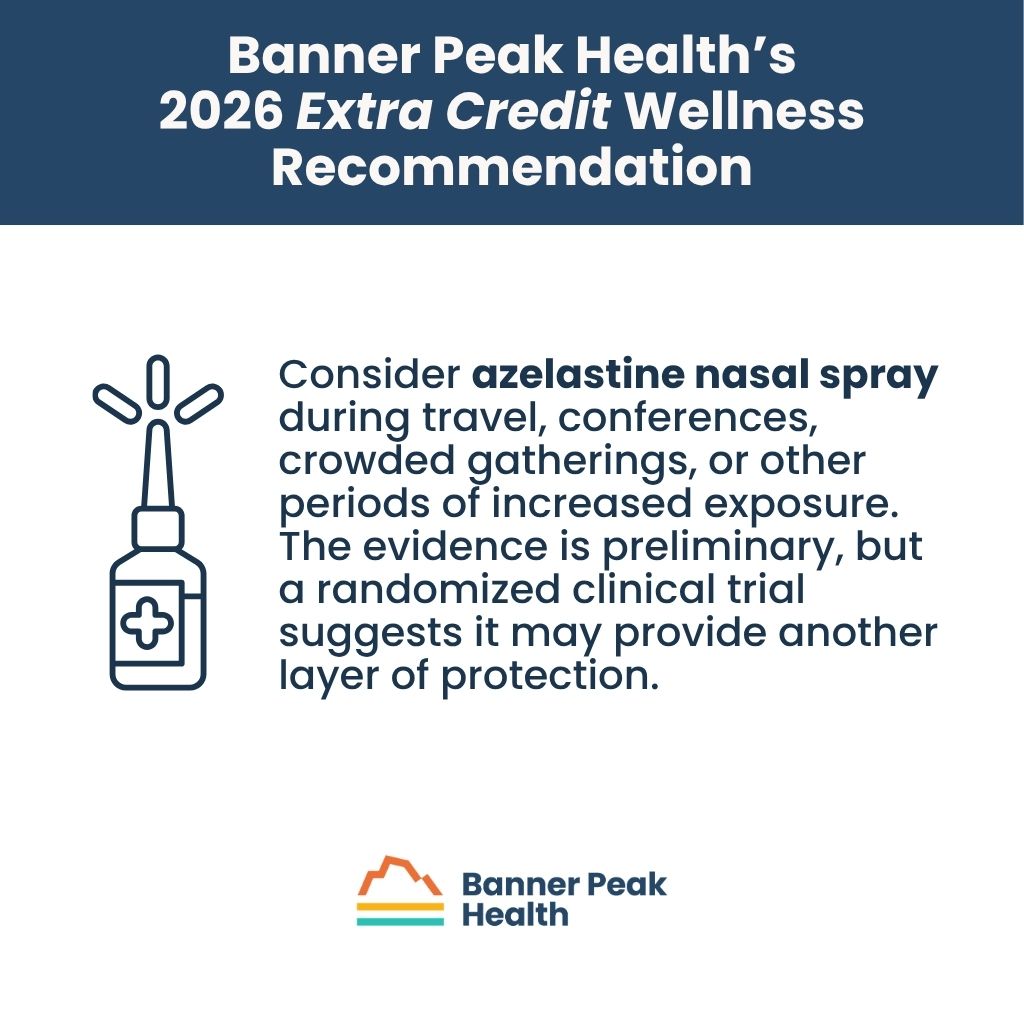
Extra credit: Consider azelastine nasal spray during travel, conferences, crowded gatherings, or other periods of increased exposure. The evidence is preliminary, but a randomized clinical trial suggests it may provide another layer of protection.
Contact our team if you’re uncertain about your individual recommendations.
Best of Health,
Barry Rotman, MD
Waheeda Hiller, MD
Lindsay Klein, MD
Ari Katz, MD