
David Bowie once said, “Aging is an extraordinary process where you become the person you always should have been.”
I love that quote. It reframes aging as an evolution rather than a decline. And it stands in stark contrast to the message most of us receive from the beauty and wellness industry, where “ageless” means looking 35 at 55, and “anti-aging” implies we’re fighting a war we’re destined to lose.
As a physician, I define agelessness differently. It’s not about face creams, peptides, or the next miracle drug. It’s about resilience: the body’s capacity to absorb a stressor and return to its natural equilibrium state, or even adapt upward from it.
What Aging Looks Like at the Cellular Level
Aging is a declining ability to return to baseline after a stressor.
In your 20s, you stayed up late, ate junk food, drank too much without consequence, exercised on and off, caught colds, and bounced back within a day or two. Your body handled neurologic stressors (poor sleep, alcohol), metabolic stressors (junk food), cardiovascular stressors (weekend warrior sprints), and immune stressors (infections) with speed, precision, and proportionality.
We’ve all felt the change: “I used to be able to do this and feel fine the next day!” That’s aging: the loss of adaptability, not the number on your birthday card.
At the cellular level, researchers such as Carlos Lopez-Otin have cataloged the hallmarks of this process: genomic instability, telomere attrition, mitochondrial dysfunction, cellular senescence, and chronic inflammation. Every one of these hallmarks traces back to the cell’s declining ability to respond, repair, and restore.
Senescent cells (cells the body needs to clear out) aren’t “old.” They’re stress-damaged cells locked in a permanent damage signal polluting the surrounding tissue.
This is how chronic inflammation begins.
The Fire Pit: How Inflammation Becomes Chronic
I picture it like a campfire.
Your immune system mounts a fire to burn off damaged or diseased cells, the same way you’d burn a pile of dead leaves. That fire is inflammation, and it’s a normal, healthy response. The problem arises when the fire isn’t contained.
The rocks around the fire pit are the behaviors keeping inflammation in check: Zone 2 cardio training, resistance training for longevity, quality sleep and recovery, glucose stability and monitoring, mitochondrial health, community and social connection, and real, unprocessed food.
When gaps appear between those rocks, bits of the fire escape. Small embers of inflammation travel to other parts of the body and ignite low-grade, chronic fires. Over time, those fires spread and cause disease in tissues and organs never part of the original immune response.
A resilient body adapts. And the way we build adaptability is by maintaining every rock around that fire pit.
Measuring Resilience: VO2 Max, HRV, and Glucose Regulation
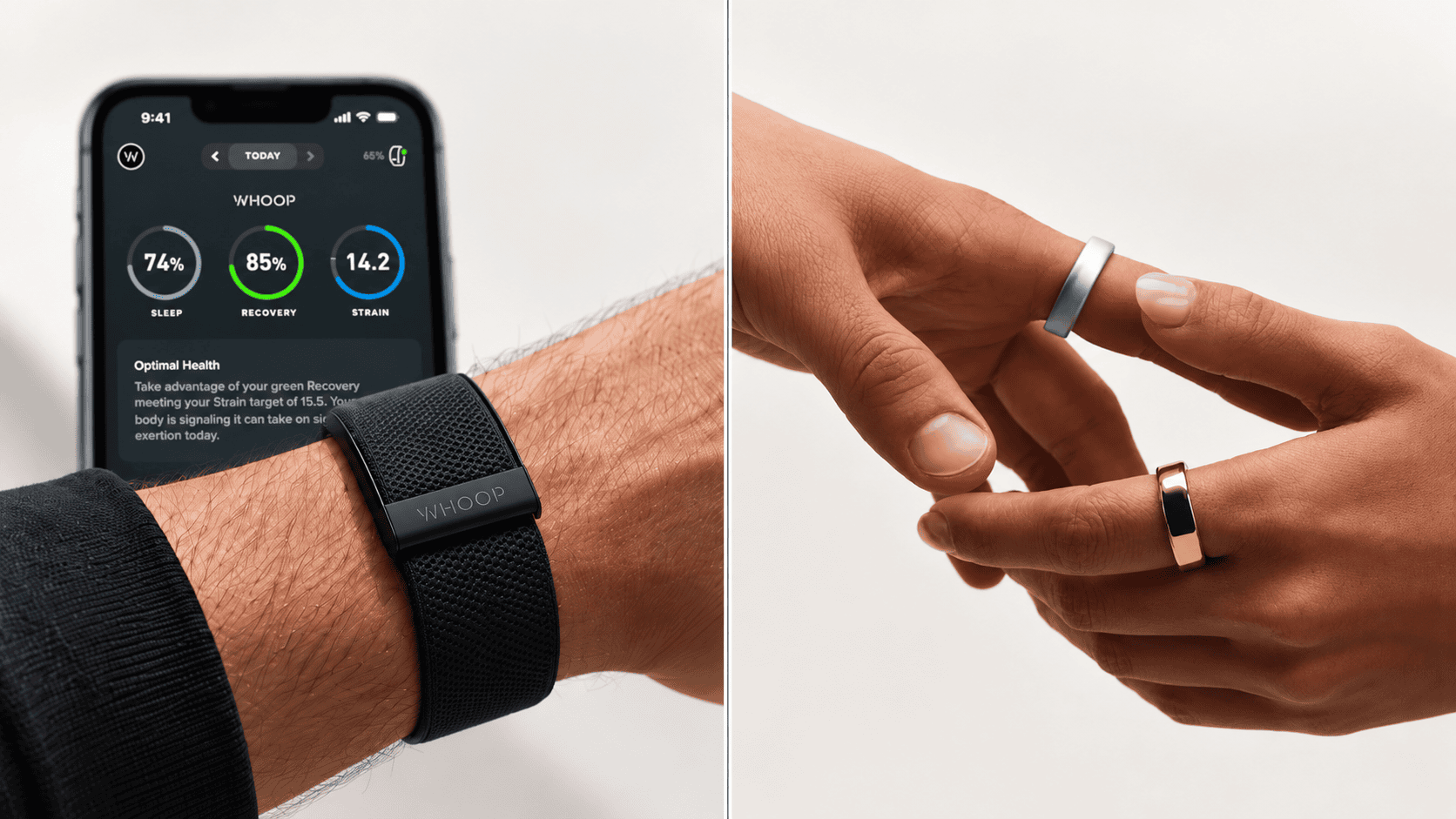
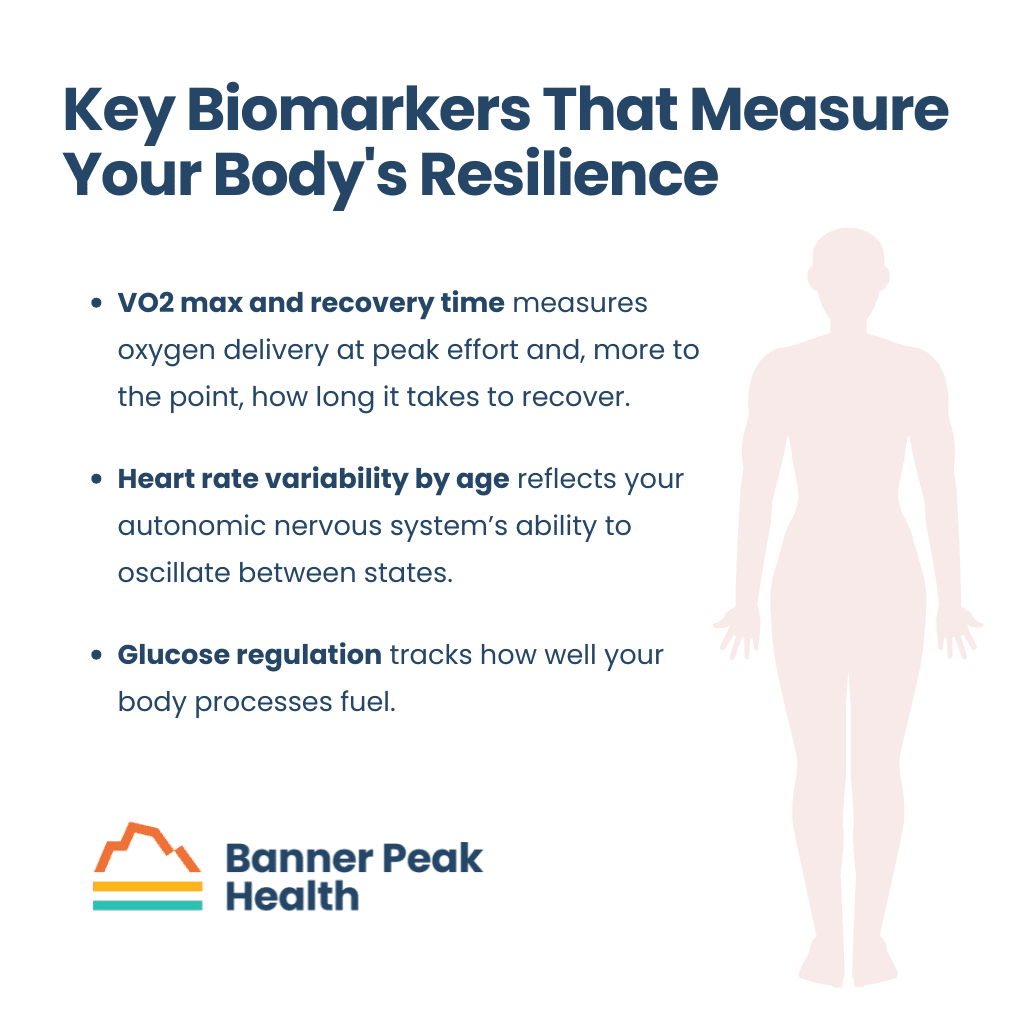
If resilience is the goal, we need ways to measure it. Three biomarkers give us the clearest picture of how well your body bounces back from stress.
VO2 max and recovery time measure oxygen delivery at peak effort and, more to the point, how long it takes to recover. It’s the single strongest predictor of longevity we have.
Heart rate variability by age reflects your autonomic nervous system’s ability to oscillate between states. A high HRV means your nervous system responds and recovers with speed. A low HRV signals a rigid, non-adaptive system.
Glucose regulation tracks how well your body processes fuel. After a meal, blood sugar spikes are normal. The question is how long it takes to return to baseline: hours or minutes?
That recovery speed tells us a lot about metabolic resilience. These aren’t vanity metrics; they’re direct measurements of your body’s ability to absorb a stressor and snap back.
Parasympathetic Rehab: Training Your Nervous System With Controlled Stress
A concept I discuss with patients is “parasympathetic rehab,” which ties back to vagus nerve stimulation techniques and what’s called hormesis: the application of controlled, recoverable stress as training.
Your sympathetic nervous system (fight or flight) mobilizes the body under stress. Your parasympathetic nervous system (rest and restore) applies the brakes and initiates recovery. The goal is to create a better, more dynamic balance between the two.
As we age, sympathetic tone increases and parasympathetic tone decreases. Chronic stress, poor sleep, and sedentary behavior amplify the imbalance.
Hormetic stressors like cold plunging and cold exposure, heat exposure, belly breathing and breath work, and fasting can help retrain the parasympathetic system. You apply a controlled stressor, then recover from it. Over time, your nervous system becomes more adaptable, more responsive, and more resilient.
But these hormetic tools aren’t replacements for the fundamentals. Don’t skip straight to cold plunges if you’re sleeping five hours a night and haven’t picked up a weight in years.
The Foundations: Exercise, Nutrition, and Sleep
Exercise is the most potent longevity drug we have. No pill, supplement, or therapy comes close.
Zone 2 cardio (sustained effort at a conversational pace) trains your mitochondria to be more efficient in both heart and skeletal muscle. This is the aerobic base every other form of fitness depends on.
Resistance training preserves muscle mass across your lifespan and is our primary defense against the metabolic fragility of aging. Lean mass protects us from falls, fractures, metabolic syndrome, and loss of independence.
Nutrition goes beyond calorie counting. Every macronutrient, phytochemical, and meal timing pattern sends signals to the pathways governing repair and stress response. Real, unprocessed whole food is the foundation.
Sleep and athletic recovery recalibrate us. Growth hormone secretion, cortisol regulation, and the glymphatic system (the brain’s waste-clearing mechanism) all depend on adequate sleep architecture. It’s the single most undervalued recovery tool in medicine.
Healthspan Over Lifespan: Compressing Morbidity
Modern medicine excels at managing crises and acute disease.
We can prevent death from cancer, heart disease, and infection. But our current system doesn’t account for the slow erosion of resilience, leaving people spending their final decades with declining function, stacks of medication, and diminished independence.
The goal of longevity medicine is to compress morbidity: to make your last decade look more like your sixth decade than a slow decline from your eighth.
The metrics that matter aren’t cholesterol and blood pressure alone. They’re VO2 max, grip strength, muscle mass and body composition, sleep architecture, and HRV.
The conversation starts with a simple question: What do you want to be able to do when you’re 75? Hike with your grandchildren? Travel on your own? What would you like your life to look like when you are in your eighth or ninth decade?
That answer shapes the strategy. At Banner Peak Health, we work backward from those goals to build a plan that protects your healthspan, not just your lifespan.
Longevity Science: Separating Signal From Noise
A lot of misinformation circulates in the longevity space, driven by a massive emotional investment. Everyone wants to live longer and better. That desire creates commercial incentives, and those incentives can distort the science.
Be skeptical and curious. Develop a relationship with evidence, not conclusions.
When a product or protocol claims to be “research-backed,” look at the actual research. A small trial in mice doesn’t validate a $200 supplement marketed to humans.
The gap between non-human trials, small pilot studies, and large-scale human evidence is enormous. Yet many claims leap across that gap without hesitation.
It comes down to signal versus noise. The signal (the part of longevity science supported by decades of consistent evidence) is exercise, sleep, nutrition, stress management, and social connection.
These aren’t glamorous. They don’t come in a bottle. But they work.
Today’s Takeaways
Build a body that recovers from stress quickly and precisely.
Start with the foundations: Zone 2 cardio, resistance training, real food, and quality sleep. Measure your resilience through VO2 max, heart rate variability, and glucose regulation. Once those foundations are solid, explore hormetic stressors to train your nervous system for greater adaptability.
Question every claim. Invest in the long game. A resilient body adapts.
At Banner Peak Health, we help our patients build resilience through data-driven, personalized health strategies. Contact our team today to learn more about optimizing your healthspan.